
Gull Rock to the east of Falmouth in Veryan Bay, sticks out of the water like the hump of a Sea Dragon. It is so prominent that you would think that it would be easy to avoid. But the sea always lays traps for the unwary, and on the night of 1st of February 1914 Gull rock claimed a victim, the German steel barque Hera.
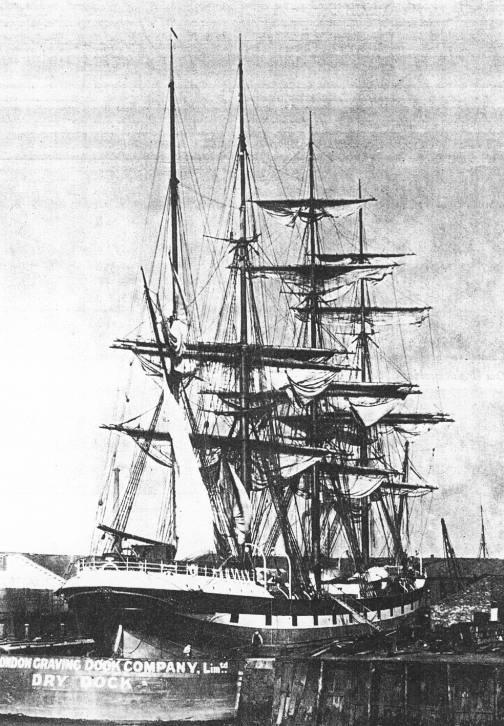
Originally a British owned vessel called the Richard Wagner, the 1994 ton Hera was owned by Rhederei Aktien of Hamburg, who also owned the ill fated square rigger, Pindos wrecked on the Manacles in 1912. On that February night the Hera was 91 days out of Pisaqua loaded with Chilien nitrates, and closing the Lizard. The weather was rough with a gale blowing, and Captain Lorentz was unsure as to his exact position. He thought to sail slowly into Falmouth bay and pick up the flash of either St. Anthony’s light or the Lizard. As dusk fell the weather steadily worsened and as the hours passed they still saw no shore lights. At about midnight the second mate reported land ahead. Captain Lorentz ordered the Hera put about, but the ship was slow to answer the helm and seconds later the Hera was impaled on Gull Rock about a quarter of a mile off Nare Head.
Distress rockets were fired and lifeboats manned, but the ship suddenly rolled forwards and as she settled by her head, the port boat capsized and Captain Lorentz and three men disappeared. After an attempt to free the starboard boat failed the Chief Officer led the crew up into the rigging to escape the seas that were now sweeping over the boat.
As the Hera sank deeper the crew had to climb further up the rigging and soon they were in a dreadful state. Cold and exhaustion soon carried of the Chief Mate and shortly after the Second Mate, Peterson also gave up and slipped into the sea. Before he went he passed over his ships whistle to one of the seamen just above him on the mast.
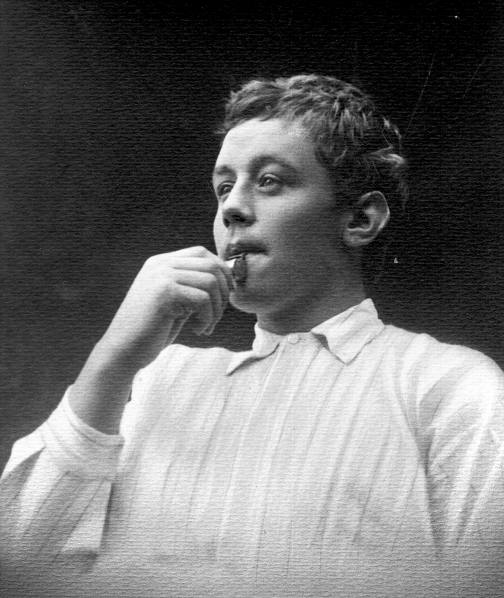
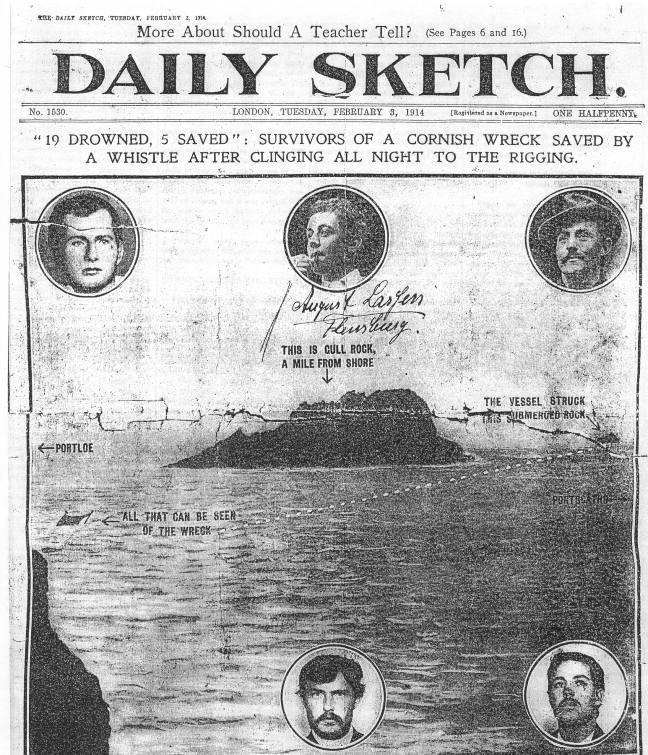
By this time only five men were left, and they were trapped halfway up the rigging of a sinking ship swept by freezing seas whipped up by a fierce gale. They had to endure these terrible conditions for another two hours before the Falmouth lifeboat finally hove into view. One of the able seamen, his hands so frozen that he could hardly hold the whistle, blew and blew until the lifeboat men heard the shrill sound just barely audible above the howling wind. With the whistle to guide them the cox’n managed to coax the lifeboat alongside the wreck of the Hera and pull the five exhausted crewmen to safety. Nineteen men died that dreadful night and their remains were buried in Veryan churchyard.(see Tombstones sectionHera)
Today the Hera lies well broken up and scattered on a rock and sandy bottom in about fifty feet of water. It is a very pretty dive with most of the metal spars and plating covered in beautiful plumose anemones. There is plenty here to see and lots of fish life especially large Pollack and a rather large orange coloured starfish.
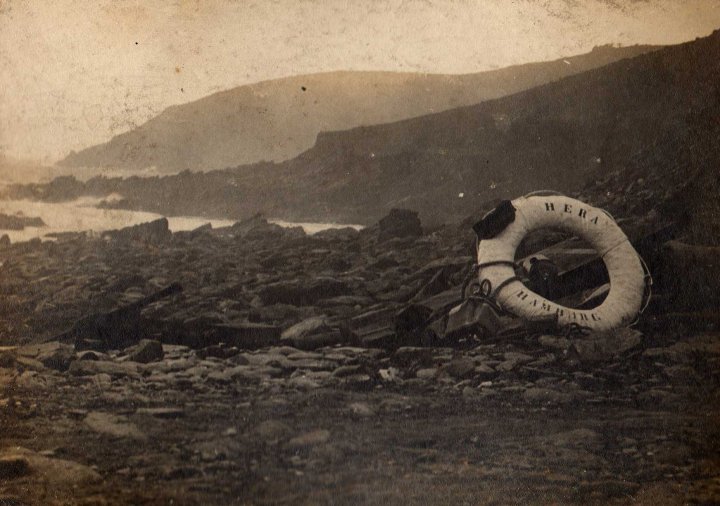
The highlight for me was part of the upturned hull of the ship. This has formed a sort of iron cave, which you can swim into. Here lurk large Pollack some bass and a small conger. Light filters in from holes in the plating lighting up shoals of small fish and makes the whole experience quite surreal. With winter storms the sand can pile up and almost block the entrances to this cave but usually they are quite clear.
Some of the mast stumps are still to be seen, and although the wreck is well broken up it is still possible to identify what bits you are swimming over. The Hera is a surprisingly compact wreck so there is not much chance of getting lost. But it is very picturesque, so you can stay down a long time, especially if you have a camera.
Listen to this great song about the Hera
Thanks: I am indebted to Ute Lassen for some of these photographs, especially the lad with the whistle who was her Grandfather. I would also like to say how gratefull I am to Paul Thomas for the photographs of the wreck, and the wonderfull story below, of his Great Grandfather William Leuty, who was part of the lifeboat crew.

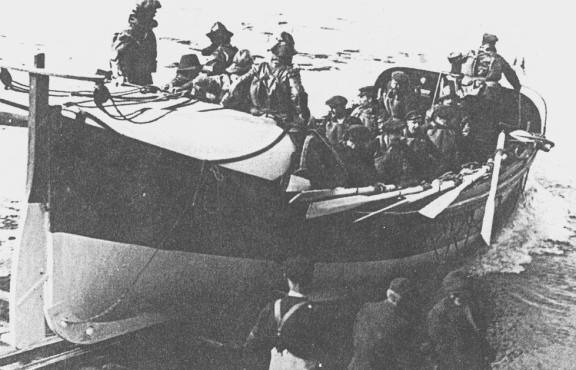
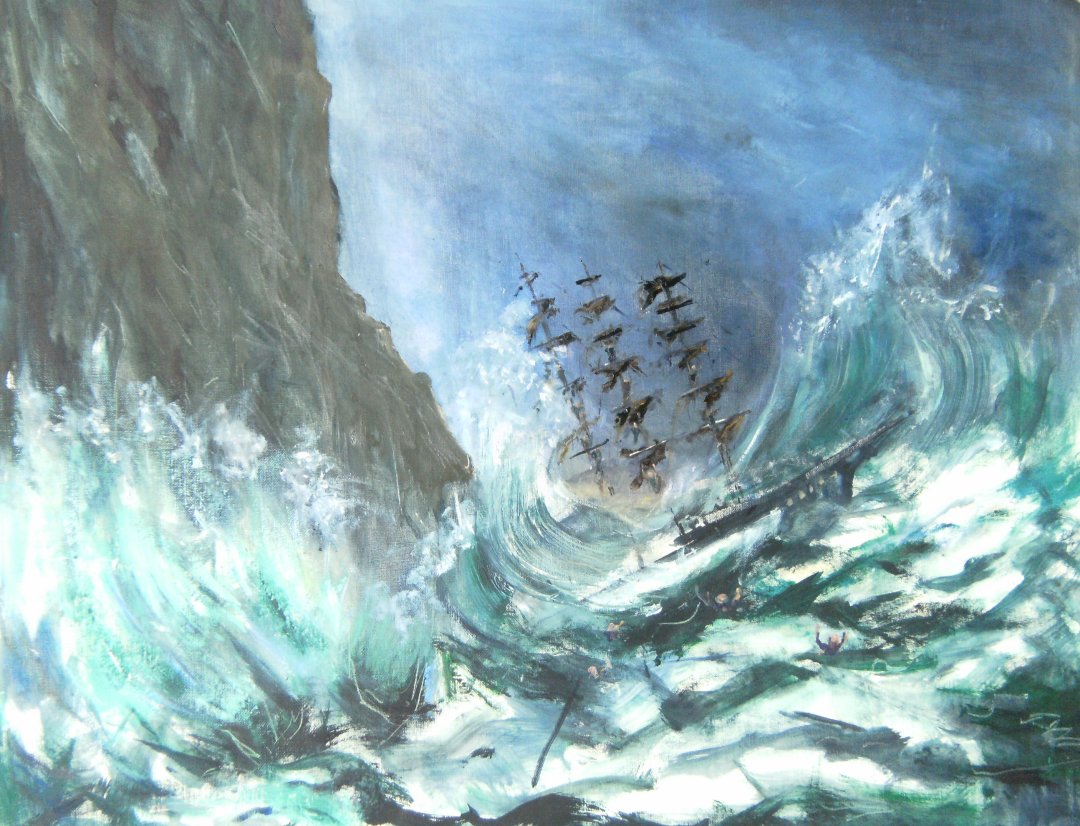
William Leuty was one of the crew of the lifeboat Bob Newton who went to the aid of the stricken Hera. When the lifeboat arrived alongside and found the crew clinging to the masts, Willie Leuty dropped the anchor. As he did so the chain rolled over his hand and severed two fingers. Willie was so cold that he never realised what had happen until he got back home and took of his cloves. Two fingers rolled out. This wasn’t the only shipwreck that William endured. During the First World, William was conscripted into the Devon and Cornwall Light Infantry. In July 1915 he found himself embarked on the steamer Royal Edward en-route to the Dardanelles. On 13th Aug, as the ship was steaming in the Mediterranean, it was torpedoed by the German submarine UB14. Within three minutes the decks were awash, and after six minutes the ship completely sank . Of the 1586 people on board less than 500 were rescued. William Leuty however, survived the dreadful sinking and became something of a hero by helping to cut free one of the lifeboats, so that it fell into the water thus ensuring that many other people were saved. William survived the Great War and became a licensed boatman in Falmouth. I am grateful to Jill Tremarkyn for the information below, and for the wonderful painting of the Hera My grandfather, Ashley Hearle received a message to go to the Nare Head with the rocket life-saving equipment ie breeches bouy to help with the rescue the crew of the Hera on 30th January 1914. This was all done with a team of horses from his farm and men from Gerrans and Portscatho. He told many times how the screams of the dying men haunted him for the rest of his life.
You can see more of the grave, including old photos and a great inscription by clicking the link below.

Rita Agius says
First of all I would like to congratulate you for this interesting website about the story of the Hera Hamburg.
It was quite commotional when I was browsing through the internet and by mistake I wrote hera. Up came this site which when I started reading I realised that this was the story that my grand father Joseph Cauchi used to relate for many many years with pride. I recognised the photos in the website because they are the same as the ones I have at home which my grand father gave to my mother.
My grandfather was Joseph Cauchi and he was one of the five who survived from drowning. He is Maltese and at the time of the shipwreck he was 19 years old.
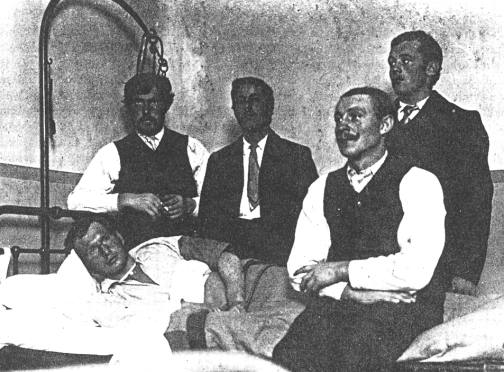
If you go to the picture that shows the five men at hospital my grand pa is the one standing up in the middle. He is wearing a tie and has a jacket or blazer that is unbuttoned . Also in the photo that shows nine men at the cemetary my grand dad Joseph Cauchi is the first from the left hand side in the bottom row. He is wearing again the same suit with the tie and the jacket is unbuttoned. Another photo where he is seen is the one that shows the story in the newspaper. He is on the right hand side at the bottom of the page.
If you want to add more information about the story I can send you the photo of the whistle that saved the five men and I also have a copy of the newspaper in Maltese that tells his story as he had related it to a Maltese journalist.
I would love to see my granfather’s name added in the website that shows the story of the shipwreck and I humbly ask you if this is possible please. I would be greatly honoured to have contributed something to my grandfather and that at last maybe the whole world would know the sacrifices that our fathers passed through to earn their living.
I look forward for your feedback and I hope that maybe I can provide some more information about what happened on that day and re-confirm what there is already known.
Thank you
Rita Agius
Paul THOMAS says
Hi Pete
the comments from Rita are a real surprise. I would really like to get in touch with Rita and exchange stories. The email address you supplied doesnt seem to work so I am hoping she will see this and get in touch through you.
Paul Thomas
melville grigg says
Just been reading about the Hera, I was the landlord of the New Inn at Veryan 1990-1995, and remember some pictures of the Hera on the walls of the bar. I hope they are still there. I remember the 19 seamen buried end to end along the churchyard wall. History!
Andy says
Hello Pete,
What a great website… very interesting and informative.
The boys of Du Hag Owr, The Roseland’s own chanteymen (of which I am a part) have written and recorded a song about the wrecking of The Hera. She sank just by Gull Rock in Gerrans Bay and still attracts divers to her wreck site. The graves of those who died on that fateful night form the longest grave in Britain which is situated in the graveyard of St Symphorian’s Church in the little village of Veryan, a short hop inland from Nare Head. You can hear our song, “The Hera”, by visiting http://www.duhagowr.co.uk/Videos.html or buy the CD from our online shop.
Also, I must just say “Hi” to Melville Grigg, whom I know very well from his time as landlord of The New Inn. I’m sure he remembers the good old Friday night sing-songs in the pub with “Trudge” and myself and the Special Brew he liked so much concealed beneath the bar!
Andy.
Mark Milburn says
Hi Peter
Great collection of info. I have just adopted the wreck under the Nautical Archaeological Society’s ‘Adopt-a-Wreck’ scheme. I intend to document as much info about the Hera as possible as well as photo’s of how it is now and has been for the last 10 years I have been diving it. I would like to re-produce some of your info, if possible, on my website crediting your website for the info. Please let me know if this is OK.
Thanks
Mark.
Mark Milburn says
One comment, which you can ignore or delete.
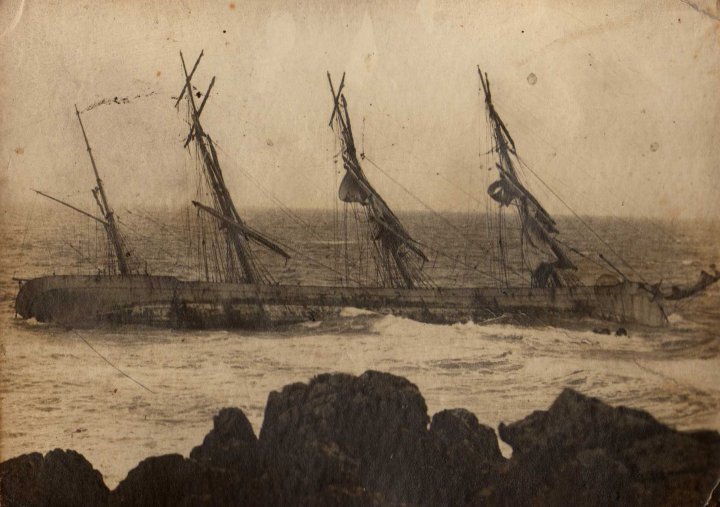
I doubt if the 3rd picture down is that of the Hera. The layout of the ship is right but there is no way that picture could have been taken. The ship struck at night and the drifted around Gull Rock. The only way the picture could have been taken would have been from Gull Rock with night vision. It’s resting position is much further from land. I think the picture is actually of the Andromeda wreck a couple of miles away.
p.s. If you want any underwater pics of the Hera to add let me know. I dive it many times a year.
Cheers
Mark.
Gail Stribley says
I was so pleased to come across this website as I’ve been trying to find information on the rescue of the HERA for some time. Thanks for doing the legwork Paul!
My Great Grandfather, Thomas Pollard was also part of the lifeboat crew serving on the Bob Newbon and attended the rescue of the HERA. My grandmother remembered that his hands were raw from the effort of rowing and he bathed his hands for days in salt water until they were better. My Great Grandfather must have been quite elderly when he was part of the crew having been a ships bosun sailing the trade routes to the East Indies.
My cousin Tim Julian carried on the family tradition of serving with the RNLI and for many years was the mechanic on the Falmouth Lifeboat. Mark Pollard, who I believe is the current skipper of the Falmouth Inshore Lifeboat is another of Thomas Pollards great grandchildren.
Kathryn Atkin says
“During the First World, William (Leuty) was conscripted into the Devon and Cornwall Light Infantry.”
William Leuty, SS/14261, volunteered for the Army Service Corps Supply Special in June 1915 with other Cornishmen.
Kath.
Jill Thomas says
My grandfather, Ashley Hearle received a message to go to the Nare Head with the rocket life-saving equipment ie breeches bouy to help with the rescue the crew of the Hera on 30th January 1914. This was all done with a team of horses from his farm and men from Gerrans and Portscatho. He told many times how the screams of the dying men haunted him for the rest of his life.
gloria wilding says
We Are still trying to find any members of the james leuty family alive as we don’t know anything about our family in cornwall our great granmother is mary jane leuty born in 1876 falmouth. please get in touch if anyone knows anything no matter how small as we don’t know anything about our ancestors. Also does anyone know of any local newspapers where we can put a advert in looking for the leuty family of falmouth. thankyou everyone for any help.
gloria wilding says
if you can help with our research in to the leuty family of falmouth please e-mail me yamyam1860@yahoo.co.uk Gloria Wilding
Submerged Comment says
Kevin Patience (saburi@hotmail.com) wrote:
A most interesting site. I was Diving Officer of the Sub Aqua Club at RAF St Mawgan in 1970 and we located and dived the wreck courtesy of Richard Larne who had written about the ship.
I gave the New Inn at Veryan two coal blocks off the wreck, used to fire the donkey boiler for the steam winches. One of these was burnt in the fireplace in the bar and produced tremendous heat. Later we presented the pub with a pulley block with a brass plate attached from the Club. The most extraordinary aspect of our diving on the wreck concerned the grave in the churchyard which was totally overgrown. We offered to clear it and returned two weeks later to find it had been cleaned but no one in the village had any idea who had done the job, and the mystery remains.
Submerged Comment says
Revd Canon Doug Robins (fatherdougrobins@talktalk.net) wrote:
I am the priest in charge of Veryan parish where the grave of the Hera crew members is situated. Next year will be the centenary of the tragedy. We intend to commemorate the event and would like to contact any descendants of the crew and of anyone involved in the rescue. Please contact me as soon as possible indicating whether you would like to be involved in the commemoration. Thank you.
Submerged Comment says
Sally Maile (sallyanne-truro2662@hotmail.co.uk) wrote:
I happened upon the Hera gravestone today had a coffee at the Inn and saw a photograph of the Hera. I wanted to learn more which led me to this website. What a sad fascinating story. Revd Canon Doug Robins can anyone come along I would love to come to the commemoration if possible?
May have to take up diving!?
Steve McEwen says
I have been diving and taking hundreds of divers from all parts of the country and the worid for the last 33years to the wreck of the Hera. One of the things I do before the divers enter the the water I tell them the story of how she sunk and what happend to the crew especially about the crew up the mast and about the whistle and the church where the graves are.This wreck is one of the most beautiful and colourful wrecks in the west country.We will be diving the Hera on the 1st of February 2014 to commemorate 100years of it sinking
Geoff Pollard says
Tom Pollard was my gran father as previously mentioned Mark Pollard is the great grandson of Tom and the currant Coxswain of The Falmouth Lifeboat
Pam Andrews (formerly Blamey) says
I received information this week on Hera’s 100 yrs Anniversary from my Sister-In-Law who lives in Veryan, my Father-in-law used to be a Coastguard in Portloe. I was married in Veryan Church in 1962 and my Son was born in Portloe. I have wandered around The Churchyard many times and seen the graves and it is wonderful to find all this extra information. Very sad, but what a wonderful Memorium to all those lost on that tragic night.
Chris Pascoe says
My Grandfather James Pascoe was one of the Gerrans men who went with Mr Hearle to operate the rocket apparatus when the Hers struck. I remember his youngest son [Wilfred Pascoe], my father telling me about the event when I was a boy.
I should be endebted to anyone who has information about another wreck that of the Andromeda which I also remember my father talking about as it happened when he was a boy . Apparently the beach was covered waist deep in places with wheat.
John Leach says
The third photo down is The German Barque Pindos wrecked on to Chynhalls Point just to the West of Coverack on 10th February 1912 two years before The Hera, with the same owners.The crew from Pindos were all saved by Coverack Lifeboat. It was reported that in early years she also brought cargoes of nitrates back from Chile, and broke all records with a sailing time of 57 days to the English Channel.The Hera time was 91days covering approx 12500 nautical miles, the Pindos must have been flying.Back to the Hera, the information I gathered when I was younger from my Grandfather Fred Trudgeon and other old fisherman from Portloe is that the Hera struck the shallow ground on the eastern end of Gullrock known as the Neck of the Gray to the fisherman and not the Outer Stone as is mentioned in some reports.All who saw her flares confirm this position including the Coastguard from Portloe the wreck site also confirms this and the wind and tide South Easterly and Spring Tides. The only photo taken the morning of the 1st of February shows her mast heads. The first divers to go down on the wreck in the late 50s were from the Midlands which included John Spears.they were taken out by William Arthur Blamey (Will Arts) they recovered some various bits including a port scuttle which I am fortunate to have.
William George Dowrick says
At this time in February, 1914, my mother, Christine Johns lived at
Caragloose Farm. Her half brother was Naily Johns, whom many will remember. My mother would have been 17 at the time. My grandmother would often regale me with the awful events of that night.
Simon Best says
My ancestors the May family came from Veryan. Canon Kempe buried the sailors from the Hera. Just 4 months before, he buried my grandfather Joseph May, the first cornish cyclist killed by a motor car, (6th sept 1913 at Trewartha) .I think my grandfather is buried near the sailors, but he doesn’t have a headstone.
John Leach says
Heading of Photo ” The Hera Impaled on the Rocks ” Photo by Paul Thomas.
NO THIS IS NOT THE HERA.
This is the PINDOS Wreck just west of COVERACK February 1912 “NOT THE MANACELAS”
Please amend this incorrect information.