
The wrecking of the Belgian steamer the Louis Shied could almost be a Victorian tale of virtue going un-rewarded. The Louis Shied, on her way home to Antwerp in the early morning of 7 December 1939, came across the remains of the stricken- ed freighter the Tajandoen, sinking off the south coast of Devon. The Tajandoen had either been torpedoed or struck a mine. In any event there had been a terrific explosion in the engine room, and she had gone down very rapidly. Even so, most of the crew and passengers managed to get off the ship and into the lifeboats.
Unfortunately eight hundred tons of fuel oil had been released in the explosion, and lay in a vast spreading pool about the ship. As the lifeboats left the foundering vessel, flames from the fiercely burning engine room shot up out of the Tajandoen’s funnels and set fire to the oil. The lifeboat, crews sizing up the situation, rowed like demons with the huge flames roaring all about them. With the fire threatening to burn their very oars, and with the passengers frantically beating off the flames, it was touch and go.
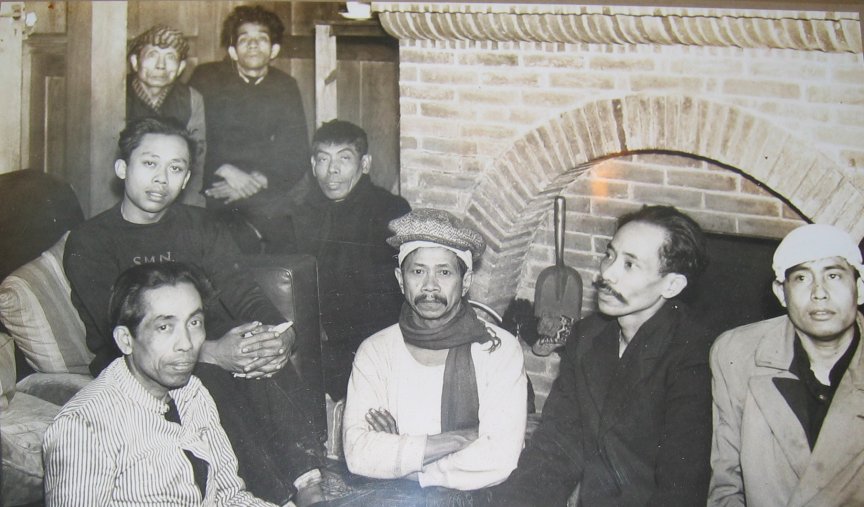
some of the Tajanden’s crewIn the end all the boats managed to reach the safety of the open sea, in time to see their ship disappear in a seething mass of flames. The Louis Sheid, together with the Italian steamer the Georgio Ohlsen, managed to pick up about forty survivors, all of which were transferred to the Louis Shied for transport back to Antwerp. Although a neutral ship, the Louis Shied was taking a considerable risk stopping in waters so much favoured by the Uboats. However, the visibility was very poor, and once all the survivors were safely on board, the Master of the Louis Shied decided to minimise the risk from any possible submarine attack by clinging close to the Devon shore. With the good deeds just performed, Providence should have ensured a safe passage home. Alas for the Louis Shied, Providence forsook them.
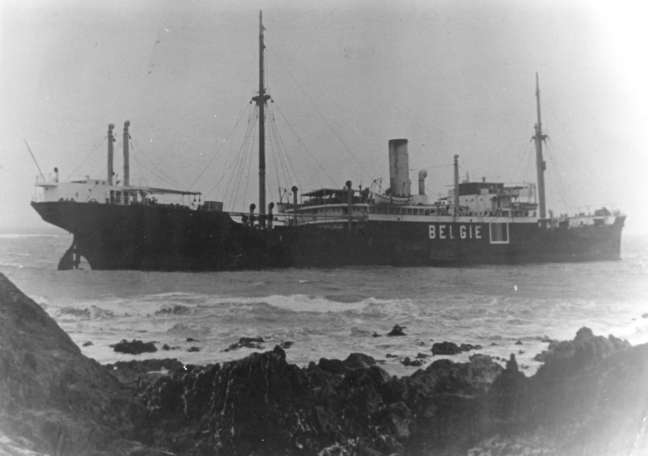
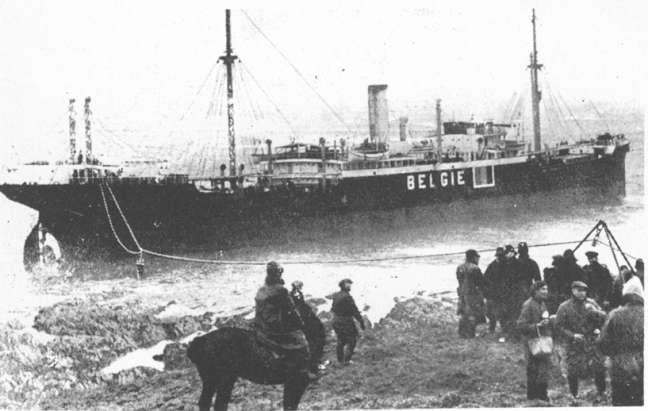
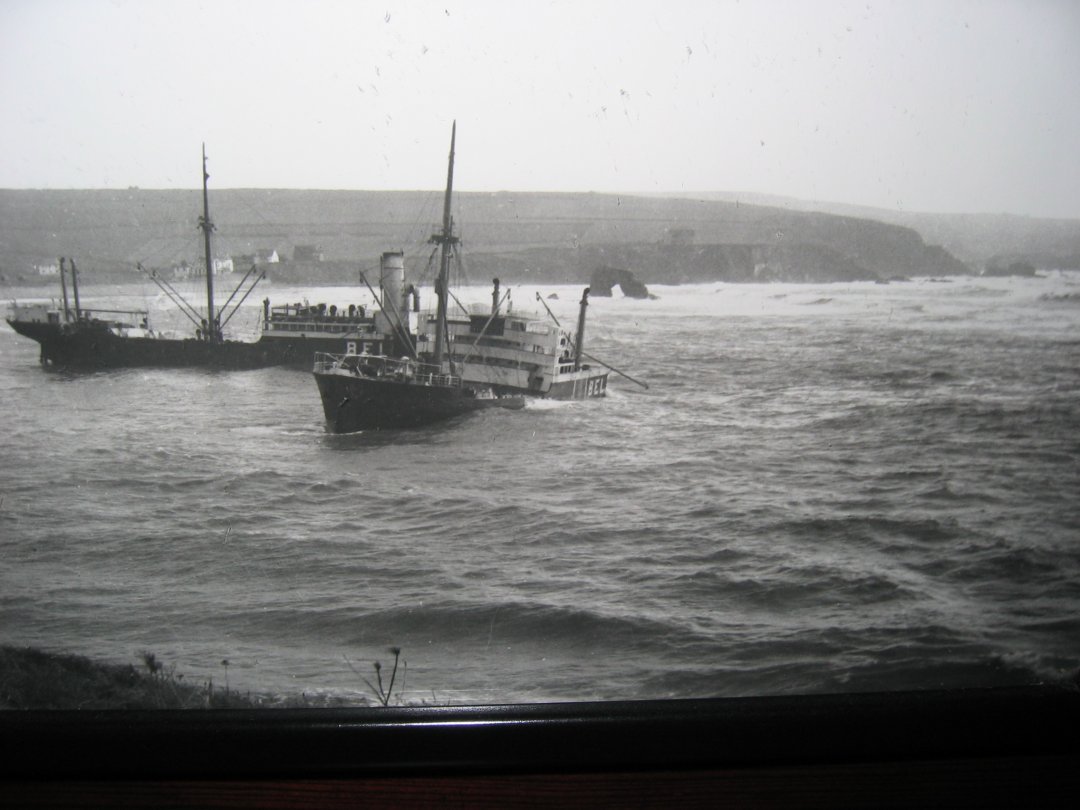
As the day turned to night, heavy rain squalls and the complete absence of any shore lights made conditions extremely difficult. The Louis Shied now unknowingly too close to the land for safety, sailed on into Thurlestone Bay, struck a rock and stranded on a reef directly under what was then the Links Hotel. To make matters worse, a southerly gale had started to blow, and huge waves were forcing the ship even further onto the rocks. With great skill the Salcombe lifeboat managed to get out to the Louis Shied and effect the rescue of everyone on board, some sixty-two in all. Since the Louis Shied had struck at low tide, there was every hope of saving her, but alas, as she floated off the rocks at high tide, the huge waves smashed her broadside onto the cliffs and wedged her even more firmly. In the end she defied all attempts to save her and was abandoned. Later she broke in two and was extensively cut up and salvaged piecemeal. A sad end to a brave ship.
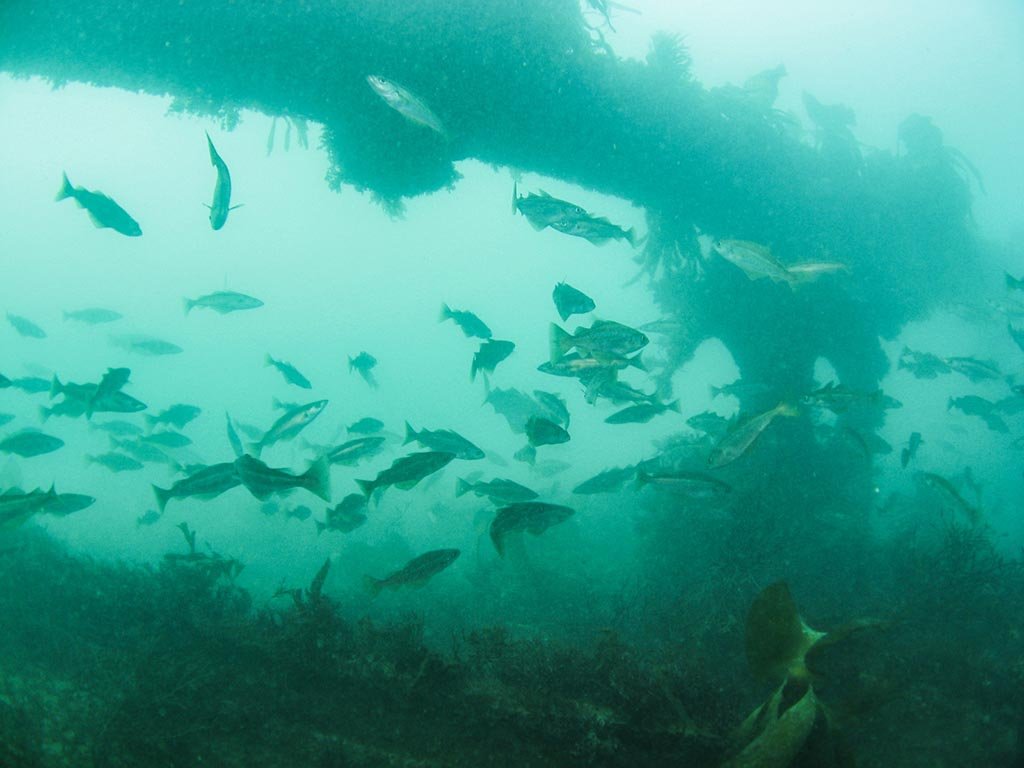
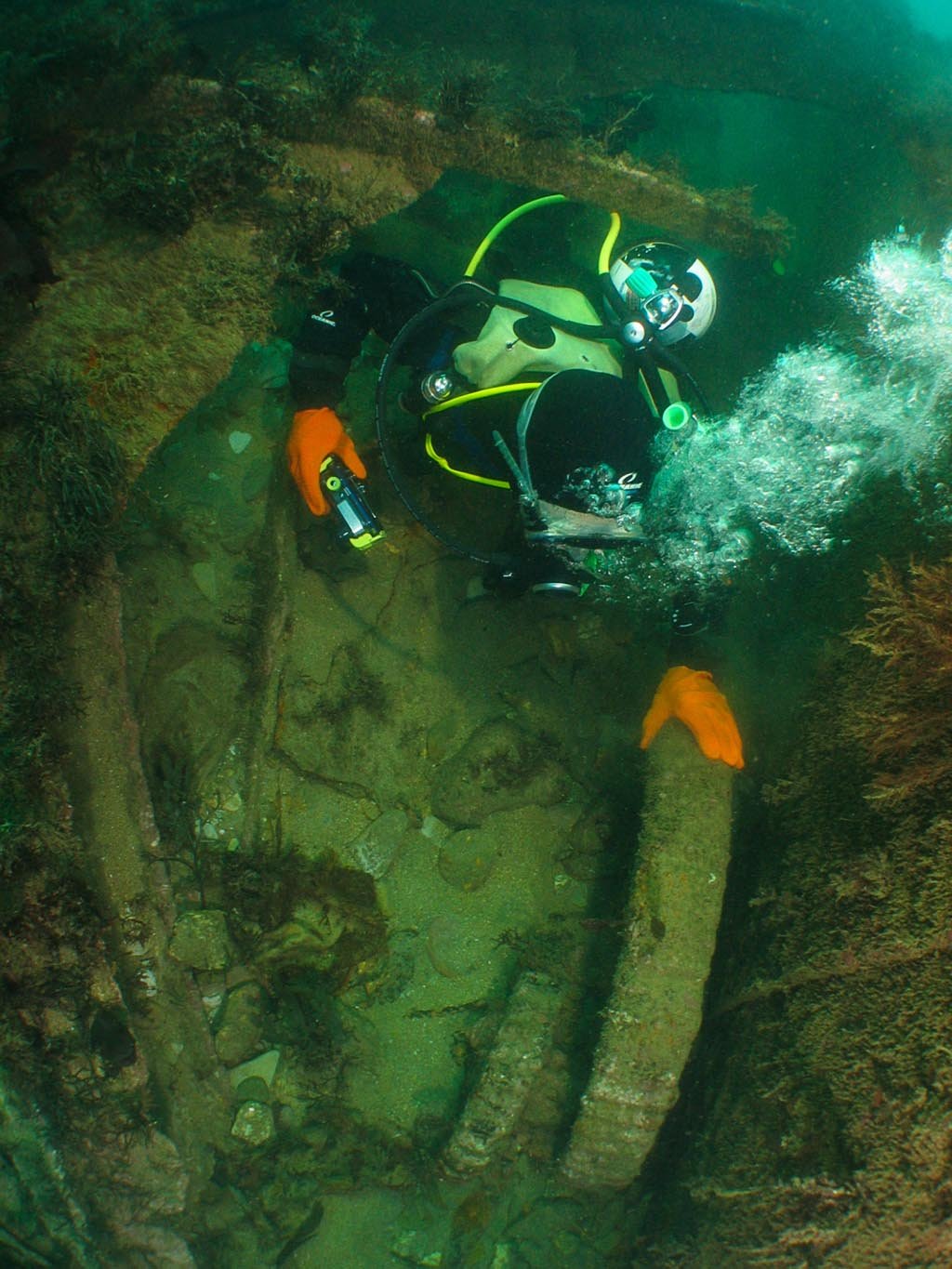
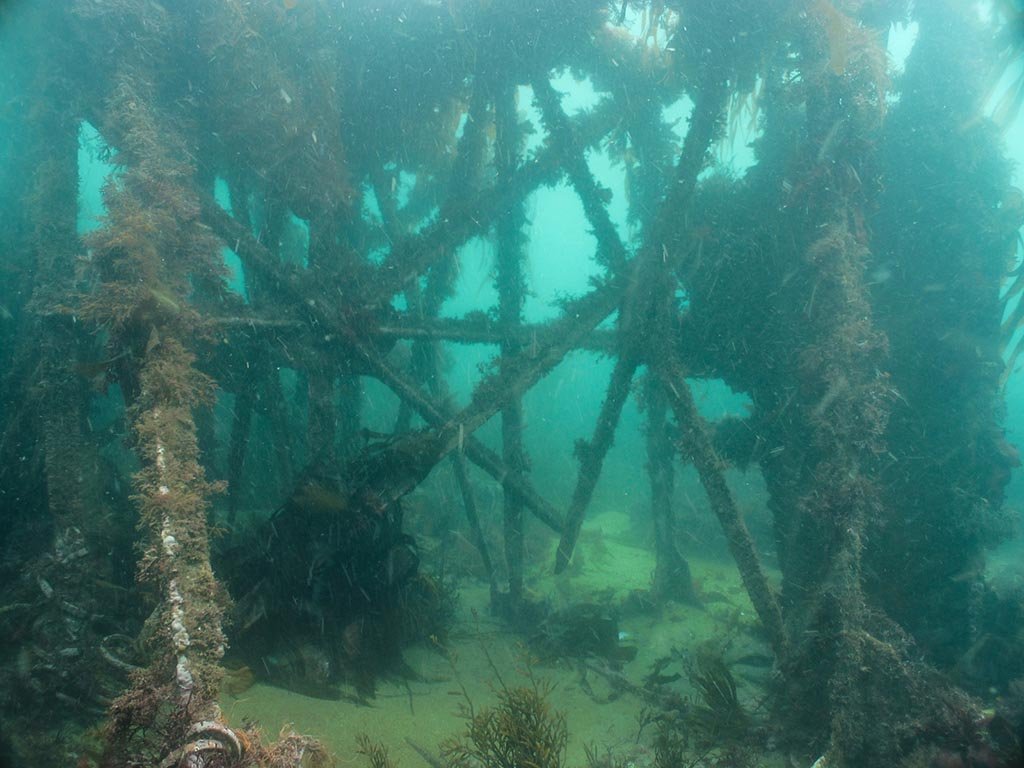
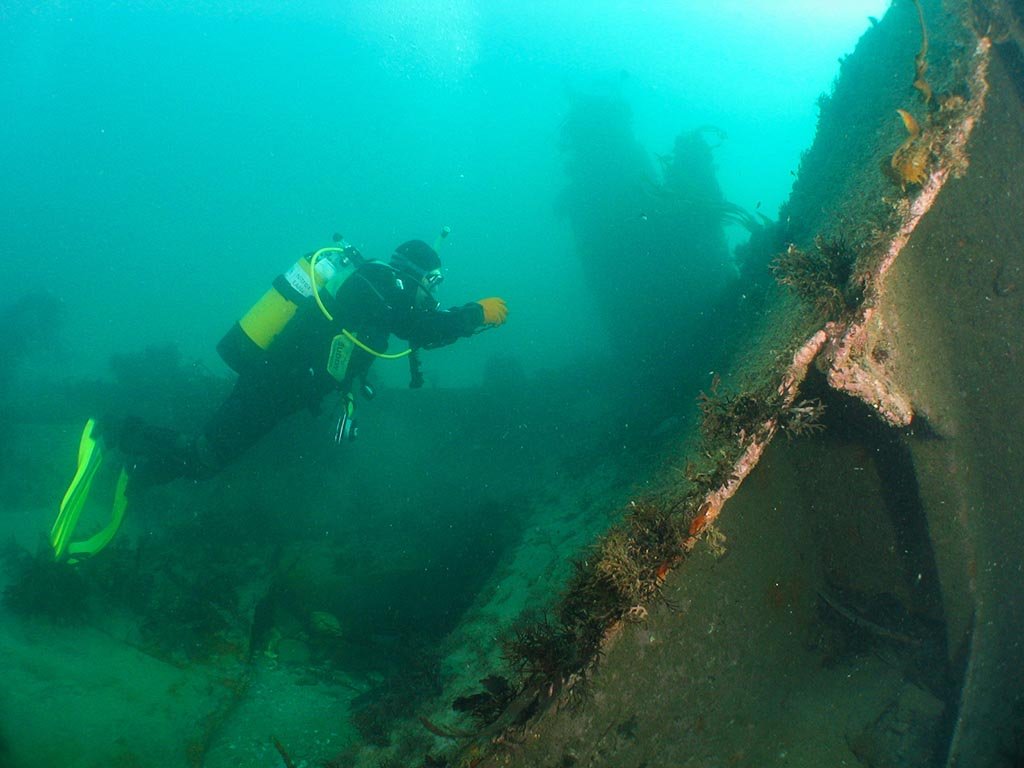
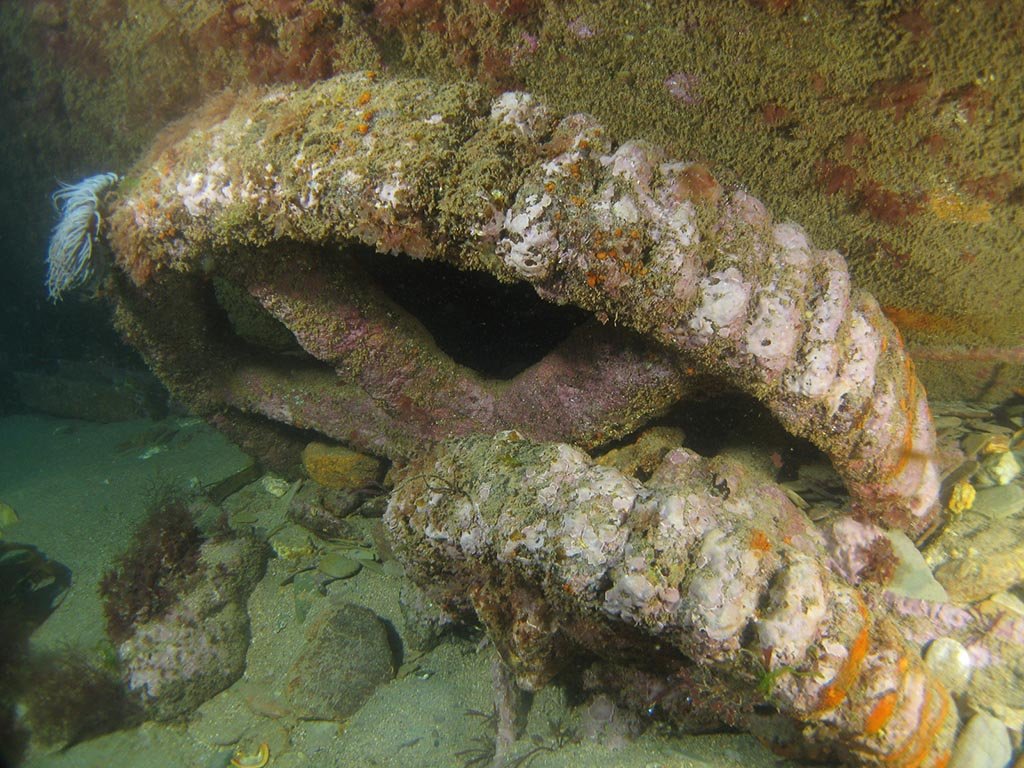
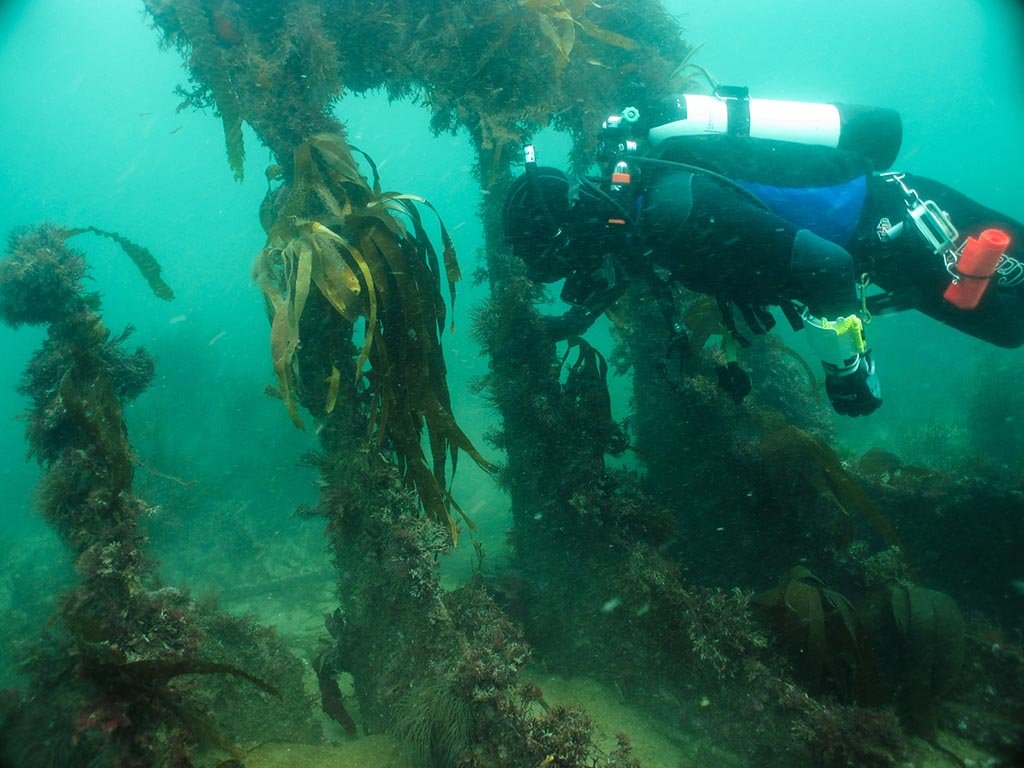
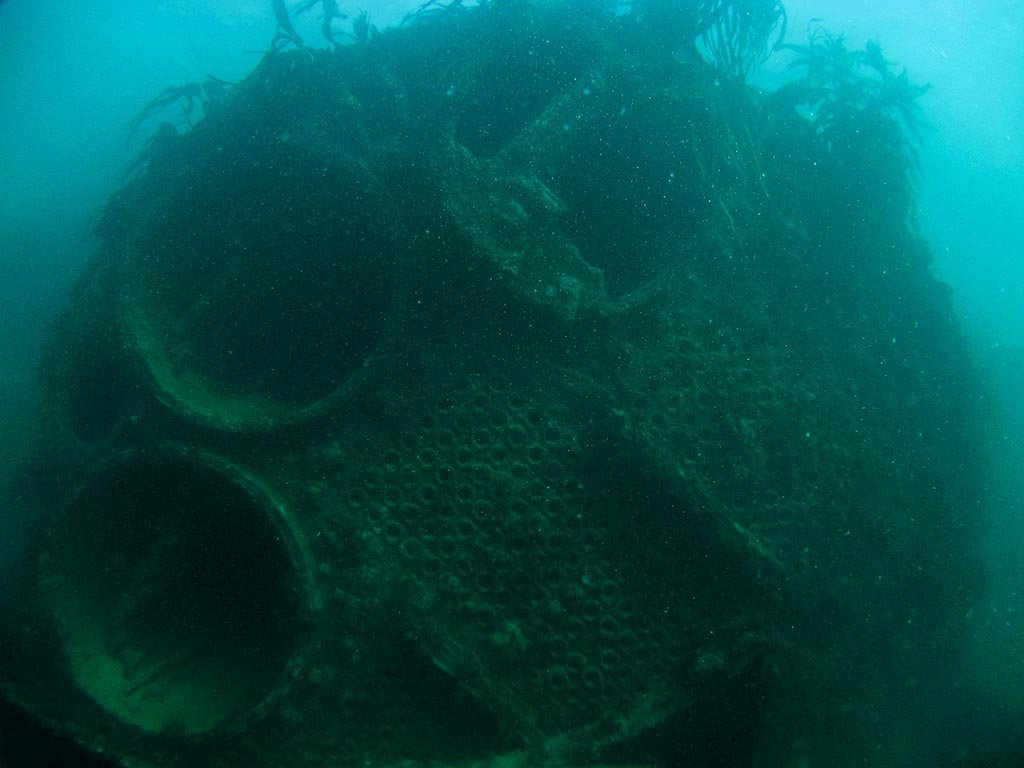
Because the Louis Shied foundered so close inshore, this wreck makes an ideal shore dive. You can get at it from one of the beaches either side of the point upon which the old hotel is sited, (now a block of luxury flats), but the easiest is the beach next to the golf club. You can use the club’s large car park, and from there it is a short walk to the beach. From the beach, which incidentally provides safe bathing even for young children, the wreck is only a short swim away and is impossible to miss. What’s left of the Louis Shied now lies in less than thirty feet of water, scattered on a bed of rock and fine sand. At low tide some metal posts still show above the surface to mark her position. Down below the remains of the boilers, ribs from the hull, and masses of assorted steel plates all exude a gentle charm, which makes this wreck ideal for just pottering about on. The boilers house a colourful collection of wrasse, whilst the ribs provide shelter for hordes of large spider crabs, and numerous small fish. On a sunny summer’s day the wreck is alive with colour and movement, and has been instrumental in introducing many a young diver to the thrills of wreck diving.
Every so often you come across somebody who has a great personal story to tell about a wreck. Gordon Collony is one such person. Now in his eighties,(2012) but still sharp as a tack Gordon told me about how he and a friend salvaged some of the Louis Shied in the fifties, using a hard hat to start with. Here is his story.
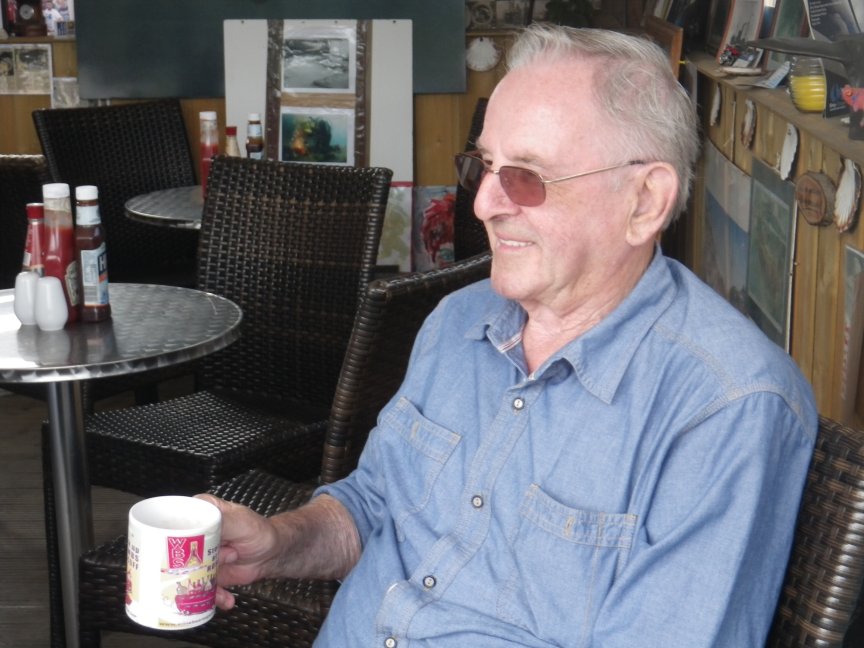
Today I met Gordon. He is in his eighties but still full of life and sharp with it. He told me the story, or at least some of the story, about scrapping the prop and the condenser from the Louis Shied wrecked in Thurlestone. Gordon found the wreck by accident in the early fifties whilst out with his family on Thurlestone beach. He snorkeler out to the stern post that still sticks out of the water and in the shallow water below he saw a large prop with four long blades. Gordon thought it would be a shame to leave it there, so decided to try and get it ashore with the help of his mate Steve. To make matters legal he went to the receiver of wrecks in Salcombe told them all about it and asked permission to have a go at salvaging the prop and anything else that was down there. In those days it was all very low key and the receiver said ‘carry on Gordon, and good luck to you’.
Gordon did not know how to dive so went off to Dartmouth to see a bloke called Captain T.E.Hampton who ran an early BSAC course. After he had done that, the next thing was to get some gear. As luck would have it the Eglington brothers were just selling off all theirs, and a small boat. They were well known for being the people who had cleared the remains of the Hoe Pier after it had been bombed in the war. Gordon and Steve got all the gear around to Thurlestone and decided to start with the prop. On examination they found that the prop consisted of four brass blades each about nine feet long bolted to a large cast iron boss They had no chance of undoing the bolts so they determined to blow it off. Although not knowing anything about explosives they did know that you had to have a licence to get some, so they went round to their local Police Station to apply for one. It was as easy as that. I know that today it sounds incredible, but I can vouch for the truth of it, because one of my friends did exactly the same in Brighton in the early sixties.
Armed with the explosive and detonators they set off to blow the prop. Gordon was not sure how much to put on the boss to break it and probably erred on the side of too much. However he didn’t think it was too much, because they stayed in the boat whilst they detonated the charge. Just as well, as the boss shattered like shrapnel, depositing the four blades on the sand. The next job was to too get the blades ashore. The boat was too small to float them in on the tide so Gordon managed to get an old petrol tank from a scrapyard. At low tide they strapped the blade to the tank and as the tide rose floated the blades into shore. Gordon borrowed a tractor to lift the blades onto a knackered lorry that he had also borrowed and of they went to the scrap yard in Plymouth. Unfortunately halfway up the steep hill from Modbury the lorry ran out of petrol so they had to leave it with its precious cargo until they got some more a few hours later. Pleased with their efforts and buoyed up by their success they decided to turn their attention to the condenser.
This was to proved much more of a problem. For a start Gordon didn’t have a boat big enough for the job, the boat had to be big enough to hold all their gear and act as a lifting vessel to float the condenser all 22 tons of it into shore. The condenser proved to be much more of a problem. For a start Gordon did not have a big enough boat to float the condenser. After a bit of looking he found an old LST in Stonehouse creek. It was in a pretty bad state but by patching it up with plywood they thought it would manage to do the job and they soon sailed it around to Hope Cove just around the corner from the Louis Shied. Gordon and his mate Steve soon got to work on cutting the many pipes that held the condenser to the wreck. The condenser weighed about 22 tons with iron slabs at each end. Each of the slabs were prized off by axing all the pipes. What Gordon didn’t know at the time was that all the pipes in the condenser were full of sand. You could not tell because axing the pipes free of the slabs had closed them all off, but when it came to weighing in the condenser it was going to weigh more than they thought. That was to be a bonus. Then they started cutting off all the copper pipes that held the condenser to the wreck and when they thought they had done all they could they blew of the big exhaust pipe which unfortunately had a very jagged edge and fixed wire strops underneath the great lump and took the ends up to the LST.
Mooring the boat right over the condenser the strops were fastened around railway sleepers which had been placed across the beam of the boat. The wires were held together by bulldog grips and the idea was that as the tide rose the boat would float the condenser free and closer into shore ready for the next high tide. However as the tide rose the LST started to sink lower in the water until only about a foot of freeboard was left. Realising that the condenser was stuck and about to pull the LST under Gordon franticly undid the bulldog clips at the bow. As the pressure on the boat was released the bow shot up and the stern very nearly went under and would have except for the quick thinking of Steve who had already started on the bulldog grips his end. In the nick of time his wire parted whistling over both their heads and the boat bobbed calmly on the water. With all the explosions going on people in the area started to complain a bit, especially the Hotel which over looked the wreck (it’s now a block of flats ) They said that some of their ceilings were being cracked. The Police came down and decided that it wasn’t serious, but asked Gordon to alert them and the Hotel when they were going to blast.
When Gordon went down to see what was holding the condenser he found just one two inch copper pipe, that incredibly, was still anchoring the condenser to the wreck. After chopping off the offending pipe they once more moored the boat over the condenser, fastened the strops to the railway sleepers and weighted for the next tide, which successfully floated the whole thing off the wreck and around to a beach near Hope Cove. As there was nothing to be done until the evening they went for a spot of lunch with a local fisherman, Jack Jarvis. As they set off back to their boat after lunch they came across some woolly bear garments like the ones they used under their diving gear floating in the water. They will come in useful thought Gordon as he scooped them out of the water and carried on towards his boat which at the moment was out of site in the next bay. As they approached the entrance to the bay, a holiday maker who was snorkelling close to the shore, started waving and shouting that their boat had sunk. As they got closer they saw that he was right, their boat was nowhere to be seen. What had happened, was that as the tide fell away, the LST had come down on the ragged end of the exhaust pipe, causing the condenser to roll enough to rip a great hole in the boat and sink. This was nearly the end of the game as all their diving gear was on board. Luckily the LST was only sunk in shallow water and so most of the gear was easily recovered and put in Jack Jarvis’s boat to be taken back to Hope Cove. This was just as well as later that night the wind got up and smashed the LST to pieces and spread it all over the beach.
With the condenser now nearly on the beach the job in hand was to try and get it far enough up the beach so that it could be put in a lorry and taken to the scrap yard. Gordon and Steve thought for a bit and came up with idea of using a large winch which they had seen at a surplus yard. They figured that if they dug it into the edge of the nearby golf course it would provide enough of an anchor point to enable them to turnbuckle the condenser up the beach far enough to get a lorry down to it. This worked a treat and soon the condenser was craned into the lorry and on its way to the scrapyard.

dominic says
im really looking forward to diving this wreck
woody says
you will love it its the first weck i have dived and it was really good a few wrasse about easy to get to
Paul Hennessey says
I first dived the Louis Shied about 8 years ago whilst on a family holiday, infact my son had not long qualified with BSAC, this was his first wreck dive.I have not done a great deal of shore wreck dives, to be honest i was not expecting a great deal, years of being hammered by winter storms surely would have taken there toll. However i was somewhat pleasantly suprised just how much of the wreck was still in situe and recognisable.The main feature with this site as with many wrecks are her boilers,aft of the boilers is the thrust block then the prop shaft.Some of the engine room is still recognisable, on close inspection i found two brass wheels,sadly they where both well fixed,so probably stiil there as this is not the kind of site people go equipped with tommy bars. There is a great deal of plating and girders spread all over the surrounding sea bed. Sea life is prolific with spider crabs,wrasse,Bass and one one occasion a John Dory. Since first diving the Louis Shied i try to get on her when i can, she makes for a very pleasant dive with plenty still to see.
Paul.
Dave Ring says
Dived the Louis Sheid a few weeks ago. Quite a good wreck with plenty to see and only a few miles from my home, which is bonus. Going back with mates on Saturday, definitely going to visit it in the winter when the kelp is died back, and will probably shoot some video!
Jan Cascarini says
The Louis Shied was carrying a load of soap which for years afterwards found its way onto Thurlestone beach. There was still plenty of it to be found in the late forties when my brother and I used to stay at the Links Hotel, built by my grandfather, Joshua Boyd, and then run by my aunt. One also had to beware of tar and rusty barbed wire, relics of the war, when playing on the beach.
Neb says
Thurlstone is a family favourite and have been going there since I was born and have visited the wreck many times. Lovely place and amazing report.
Tim Watson says
I was nine, living in Thurlestone, the night she beached. I remember the noise and the flares.
She had been carrying a load of grain which slowly rotted, producing a dreadful stench which lingered a long time. At least two of the ship’s lifeboats remained on the beach, in which we played; and would eat the ship’s biscuits from the under-seat lockers; until we noticed the maggots.