
When France finally fell to the invading Nazi Hordes, most of her still powerful Navy became immobilised in various ports around the world, awaiting the decision of its government whether to surrender to the Germans or place their vessels at the disposal of the hard pressed Allies. Meanwhile the French Government was in crisis. Some members fled to England, others decided to cooperate with the Germans and so formed the Vichy government which was roundly condemned by the so called ‘Free French’ under a little known general called De Gaulle.
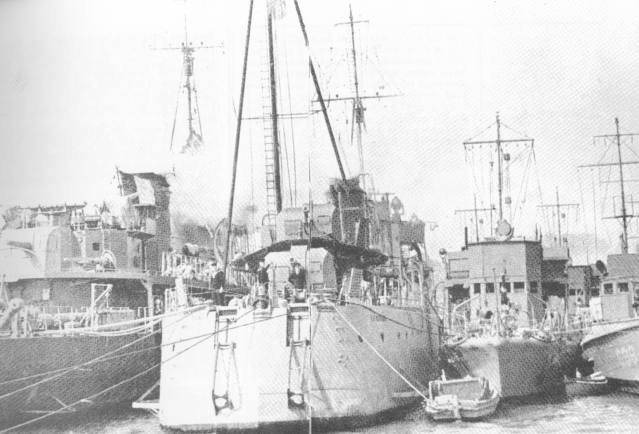
Whilst all this was going on, the British under Churchill, decided to take matters in hand and promptly commandeered at gun point the French fleet stationed at Aboukir, an episode, that even today, still rankles. The Allies then went on to commandeer every other French vessel that it could lay its hands on. One of these was the cargo carrier the Medoc, 273 feet long, 34 feet wide with a displacement of 1166 tons, the Medoc was loaded with ammunition, mostly 3.5 shell cases and cordite when she approached the vicinity of the Eddystone on the afternoon of 26 November 1940.
A lookout spotted an aircraft coming towards the ship but decided that it was friendly. He soon realised his mistake when the plane opened fire and raked the Medoc with machine gun fire. As the plane turned away into the gloom of the late afternoon the crew thought that they were in for a lucky escape. However the enemy aircraft was just getting its act together. This time as it flew towards the Medoc it rattled off a couple of bursts with its machineguns and then dropped a torpedo with devastating effect.
The Medoc sank like a stone. So quickly did she go that all thirty nine of her crew perished with her. Today the Medoc lies way down, 150 feet to the bottom. She is still more or less upright and situated in position 50 15 06 north 04 14 10 west.
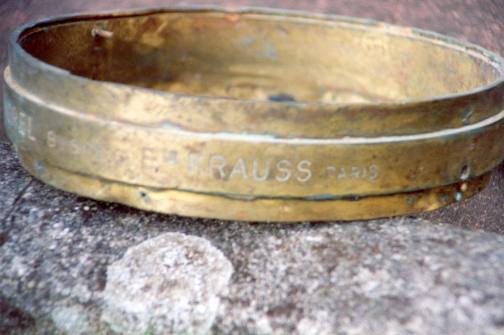
Make no mistake; this wreck is well worth the effort. Local dive skipper Roger Webber in his promotional blurb describes this wreck as ‘dripping with portholes’ and he is absolutely right. On my one and only dive on the Medoc I counted five portholes, and I was only in the middle. As I said earlier, the Medoc lies more or less upright and does not show all that many scars of battle. She has a small bridge situated towards the rear that you can swim in and out of and look at the hole where the compass binnacle was discovered. This was a significant find because up until about 1984 nobody really knew what the identity of the Halfway wreck really was. The ring around the binnacle had the maker’s name on it, and from this a positive identification was made.
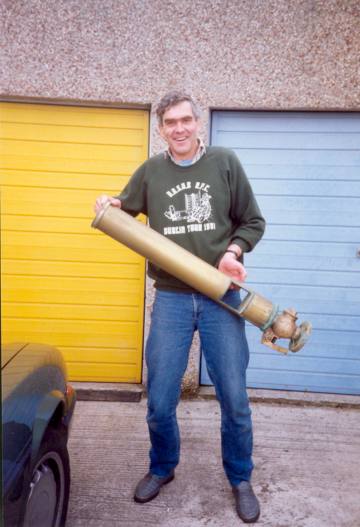
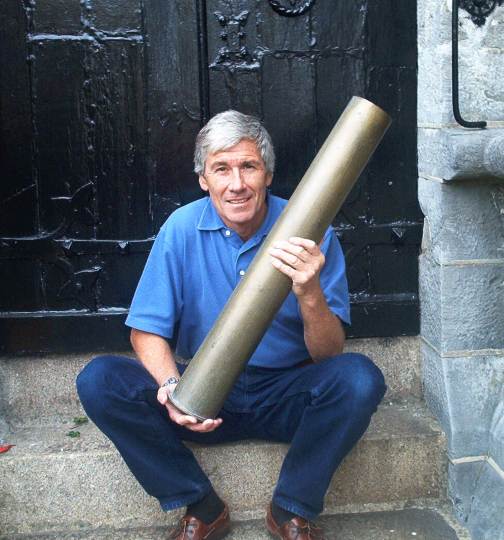
If you swim towards the bows you will come across one of the holds that is chock full of shell cases. These are all empty and so make good souvenirs. (Make sure you remove the percussion caps at the bottom). They are however quite heavy and more than one diver has had to jettison his shellcase during the long assent. By far the best way is to tie them on the line and so do your decompression in comfort. The Halfway wreck is a favourite with the charter boat fishing skippers and as such is festooned with fishing tackle. It is difficult to see the fine line and the hooks seem to snag you all the time. Although the wreck is relatively small, it gives the impression of a much larger wreck, probably because of its depth and so it is difficult to find out just where you are on it.
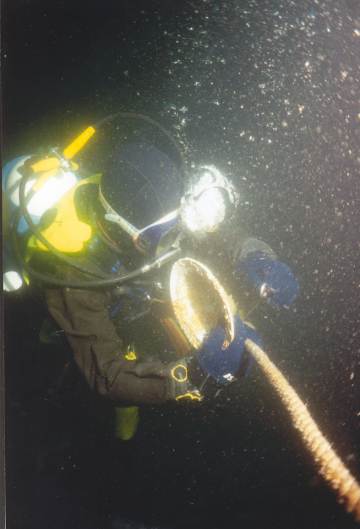
However although the Medoc is deep the visibility is usually quite good, about twenty feet, so you might not know where you are on her but you can at least see what you are doing. And there is plenty to see. Although the steam whistle, binnacle and telegraph have long gone the bridge is still largely intact, the holds are still full of shell cases, and portholes seem to be all around. This is all largely due to the fact that the Medoc is a deep and difficult wreck to find and so not that many divers venture out to her, and of course those that do just cannot spend enough time on her unless they get organised. So there the Medoc lies. A deep wreck, hard to find and so largely untouched. Definitely not one for the casual plunger. But if you are the serious sort of wrecker and you can get your team organised, then I think you will find the Halfway Wreck very interesting indeed.
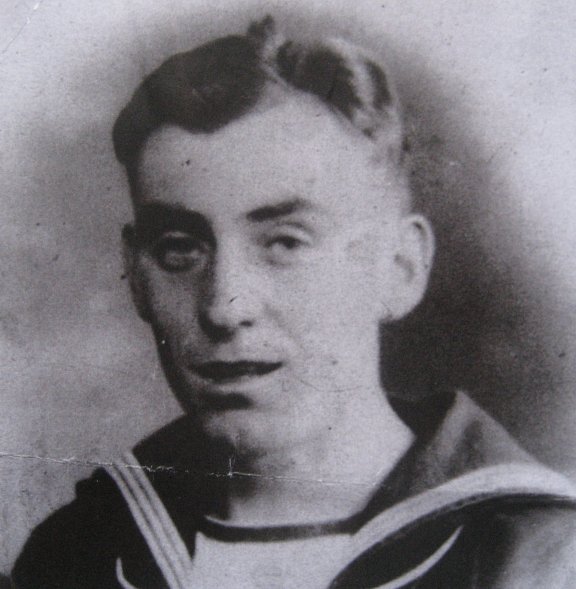
I am very gratefull to Mr. J.S.Morris for providing this photo of Ordinary Seaman Albert Joseph Brice, who was the uncle of Mr. Morris’s wife. Brice was on the Medoc when it was torpedoed, and he was killed aged just twenty seven years old. Ordinary Seaman Brice had only been married for six months and lived in Bristol. Shortly before the last voyage of the Medoc he had returned home to visit his mother who was dying before rejoining the ship. I am grateful to Cliff Gilchrist for the photo, and information about his Great Uncle John Wilson Simpson.
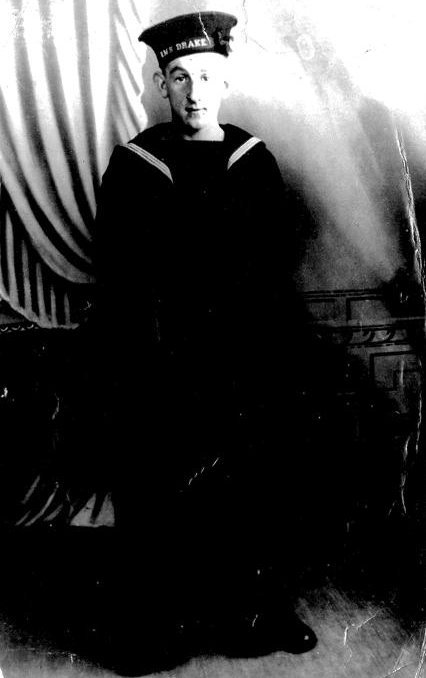
John Wilson Simpson was born on the 23rd October 1919 in Dunnet, Caithness (the most northerly point in Scotland – not John O’ Groats as many people think). So he was only 21 years old when serving as an Able Seaman on the Medoc. His parents and his 3 sisters were only informed that his ship had been torpedoed in the English Channel.

Sarah Whitaker says
Hi
Thanks for this history on the ship! I was finally able to tell my 92 year old grandmother what happened to her first Husband. He was on this ship when it sunk but she had no idea what happened to him. All she received from the Navy was a “missing presumed dead” certificate.
His name was Archibald T White and he was aged 30 when he died. He left behind my Grandmother Edith and their 2 young children.
Caroline Deady Callanan says
Well, I just read your piece on the Medoc, My grandfather James Deady was the leading stoker on this ship. Its eerie to read your report and to know that this was the burial place of my grandfather. If you go again, think of him, he was a handsome irish man, who left behind a wife and three children, my father being the youngest, he never met his dad. They never knew what happened to him, we visit a grave that has on the gravestone – lost at sea.
Caroline Deady Callanan
Cliff Gilchrist says
I wish I could dive this wreck as my Great Uncle also went down with her (James Wilson Simpson). Too old now. I also have a picture of him which you may add if you wish. Cliff Gilchrist
Dave Whelan says
Hi thanks to everyone. I am now able to tell my father what happened to his father Albert Whelan who lost his life on the Medoc. As a diver myself it would be nice to dive this, but I am not qualified to go to the depth, yet.
Paul Hennessey says
I last dived the Medoc about 5 years ago, infact sadly that has proved to be my only dive on her. We where intending to dive The Afric but for various reasons fate dictated it was not to be. Someone on the boat suggested diving the Medoc, in some Technical circles the Medoc is Poo Pooed, for what reasons remain a mystery to me. Anyway it was put to the vote, fortunatly the majority ruled and i got to dive the Medoc.Sadly on this particular day the skipper was not shall we say accurate with his shot.On getting to the sea bed there was no wreck, not wishing to be beaten by the skippers failing to shot the wreck i elected to head off in a southerly direction and see where that took me.Within a few minutes or so came the familiar shape of a bow.Still with a good 20mins of bottom time remaining i got to have a good look around the Medoc.She makes for a great dive with plenty of life. There are still many large shell cases in her holds, ideal as umbrella stands! On the bows at that time there where still a few portholes. She is very popular with local anglers so beware of line and hooks as there are many!
Paul.
adam hambly says
ive been fishing the medoc for a few years on and off, nice fishing til it got covered by nets about two months ago, so beware 75 foot south from 50.15.149 004.14.265 there is a very large trawling net up to 40 foot high…happy fishing/diving .Adam Hambly
Tania Le Bourgeois says
My grandfather William Clifford was killed on this ship. He had taken on a friend’s duty and should not actually have been on board.When the ship sank the friend went to break the news to my grandmother Florence Clifford. My grandfather is remembered on the memorial on Plymouth Hoe and this year my mother who is now 82 would like to leave a wreath at the site of the wreck. Although I never had the chance to meet my grandfather I feel a little strange at the thought of divers staring into the portholes of his grave.
Mervin W. Wallace says
My Uncle Charkes Robertson Wallace was the cook aboard the Medoc when she was torpedoed.
Stefan Roger Szrama says
My father Edward Szrama served on ORP Medoc from 28 July 1940 to 20 Oct 1940 as a Class 2 Able Seaman.The ship was on duties in the Western Approaches and during this period the crew were mainly Polish I believe.He subsequently went on to serve on the submarines ORP Sokol and ORP Dzik until the 2nd of Oct 1944.These submarines serving in the Channel Area,Bay of Biscay and the Mediterranean during their Theatre of Operations.
MERVIN WALLACE says
My Uncle Charles Robertson Wallace was the head cook aboard the Medoc, he died that day…
Paul Blackmore says
Huge thanks for this webpage and details about the Medoc Ship. All very brave men & women.
The photo above of Ordinary Seaman Albert Joseph Brice is my Great Uncle. Cannot tell you how humbled I am to see this photo. Would love to be able to contact the person who supplied this picture. My aunties have never seen this photo, so we are truly grateful.
If anyone has anymore info/photos on my Great Uncle Albert. Please comment here. Thanks
Thanks to Peter Mitchell for this article….may you rest in peace.
D. Elvidge says
My uncle,George William Newton was 20 years old when he was killed in the attack .His parents only knew he was missing presumed killed. Only recently have we found out the full story of his loss and about the ship. Sadly my grandparents and my mother have past away never knowing the full story.
Julie Jones says
Hi if anyone has a photo of 1st class stoked Frederick Ivor Wood or information . My mum was always to get information on him as she was only 3 when he got killed he was aged 21 .and he was on medoc ship hope someone can help as I do not any Aunties or uncles and my mum his sister has also passed
Kind Regards
Julie Jones