
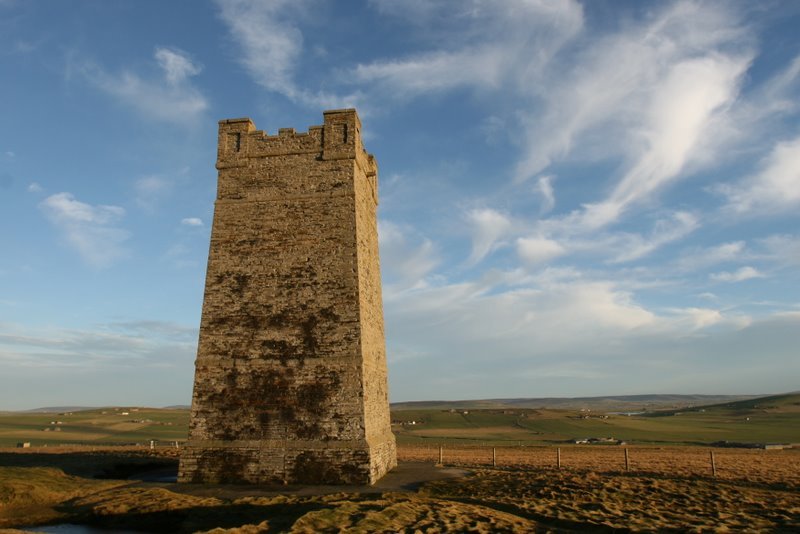
High above the stormy sea on Marwick Head, five miles east of Dounby in Orkney, stands a lonely crenallated tower built by public subscription to honour the memory of Lord Kitchener who was lost in June 1916, when the cruiser H.M.S. Hampshire sank nearby. Off the 667 officers and men on board, only 12 survived.
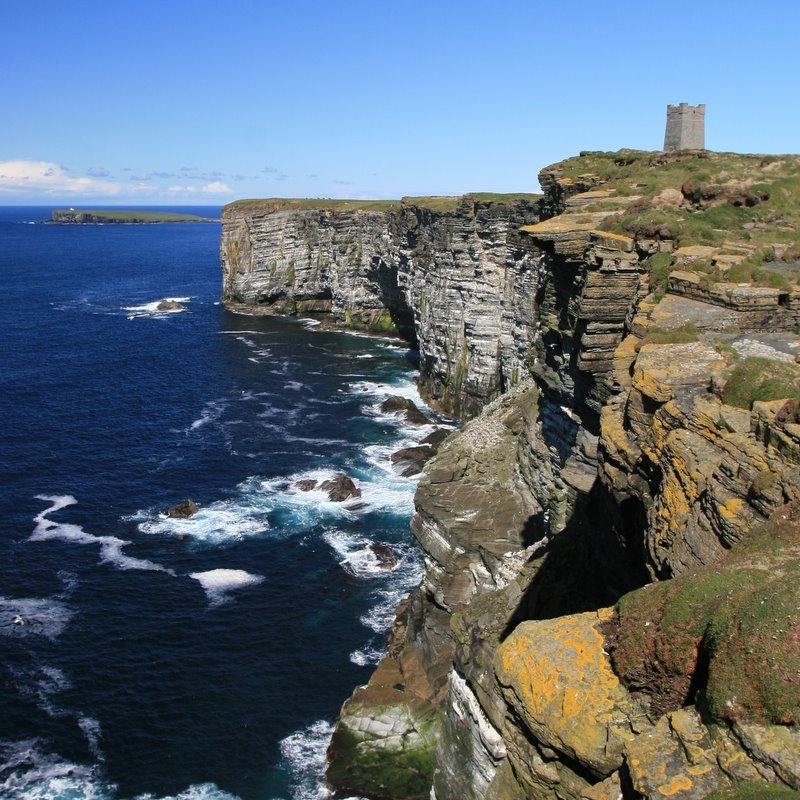
The official version of events stated that the Hampshire was taking Lord Kitchener to Russia to persuade the Tzar to keep his country in the war, when it struck a mine laid by the German submarine U75. Because Kitchener’s body was never found, rumours about his death and his mission to Russia abounded, reaching the same fever pitch as the ‘Who shot J.F.K.’ conspiracy. For instance, why were troops sent to stop locals rescuing the few survivors that were washed up on the shore? Had Kitchener been on board at all? And where was the gold bullion, supposedly being taken to Russia to bribe the Tzar if all else failed? Had the I.R.A. assassinated him? Kitchener had incurred their wrath by giving his approval to the bloody suppression of the Easter uprising of 1916, and the protracted series of executions that lasted through out May of that year.
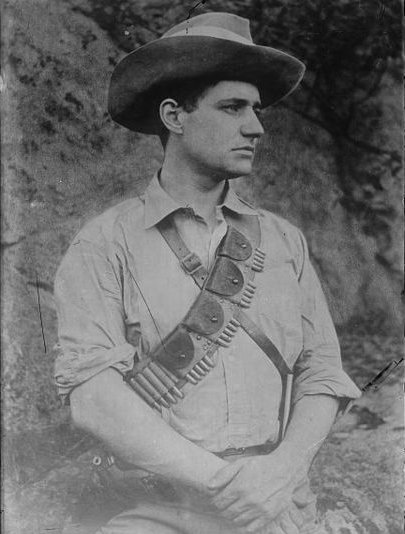
However the most persistent rumour was that a Fritz Joubert Duquesne, a Boer who hated the English for they had done to his Country, had disguised himself as the Russian Duke Boris Zakrevsky, and joined Kitchener in Scotland. He was suppossed to have signalled the German submarine, and got off H.M.S. Hampshire by using a life raft before it sank. He was apparently awarded the Iron Cross for his efforts. Interestingly the same Dunquesne ran a huge spy ring in the United States of America in the Second World War until he was caught by the F.B.I. in what became the biggest round up of spies in U.S. history. What is fact and what is fiction I will leave you to decide, and point you to this great site www.hmshampshire.co.uk that has lots more info and photos.
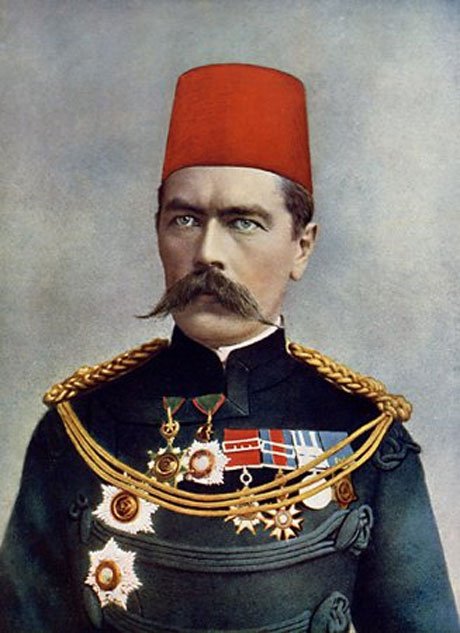
So who was Lord Kitchener, and why all the fuss? It is difficult to point to anyone in public life today and say that they are a National Hero, but that’s exactly what Kitchener was. Born in 1850 in Ireland, he came to prominence as an Aide de Camp in the failed mission to rescue General Gordon in the Sudan. He then achieved national recognition in his second tour in the Sudan (1886-1899) by defeating the army’s of Abdullah al-Taashi, the successor to the Mahdi, at the battle of Omdurman. The Mahdi had defeated and killed General Gordon, one of the great heroic figures of Victorian England, so after the battle, to avenge Gordon, Kitchener had the Mahdi’s remains exhumed, burned, and scattered in the river. For his efforts Queen Victoria appointed him Knight Commander of the Bath and made him Baron Kitchener of Khartoum.
In December of 1899 Kitchener, now a Major General, was in South Africa for the start of the Second Boer War. In a brutal and savage conflict, Kitchener humbled the Boers by laying waste to their farms and driving their women and children into specific areas where they could be controlled. These areas became known as Concentration Camps. Conditions were dreadful, and in the end twenty six thousand women and children died of starvation. Kitchener had won, and they made him up to a full General, but his legacy of Concentration Camps, would later come back and haunt the world.
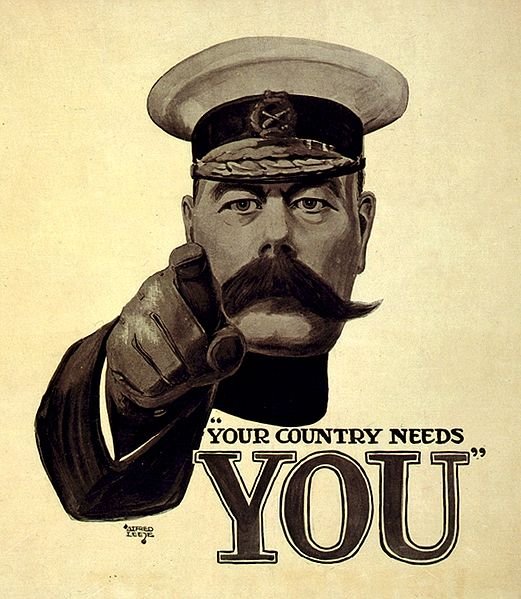
At the outbreak of the First World War, it was Field Marshall Lord Kitcheners face, on probably the most iconic poster in the world, saying Your Country Needs You, that incited thousands of eager young men to join up and fight the Germans. By now Kitchener was Secretary of State for War. Only with him at the helm, so the Country thought, could the Great War be won. So what about H.M.S.Hampshire and the secret mission to Russia?
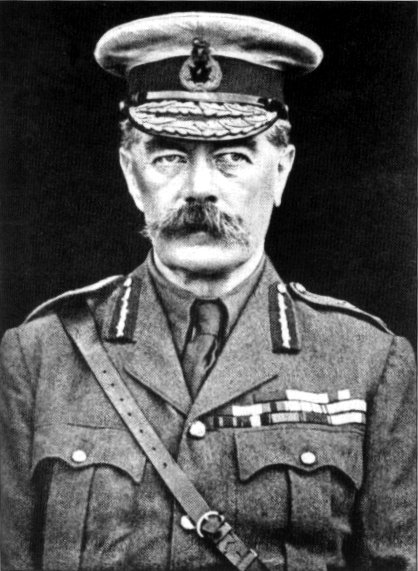
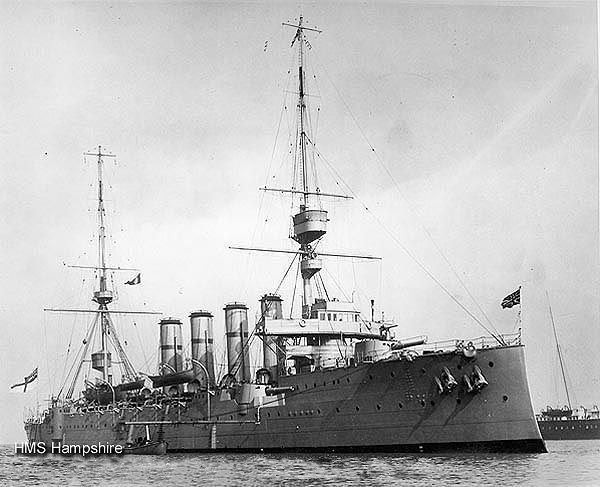
The armoured cruiser H.M.S.Hampshire was launched on the 24 September 1903 and was built by the firm of Armstrongs at Elswick. When she was completed in 1905 she joined the Channel Fleet and served in the Mediterranean and the China Station, returning to Scapa Flow, where on the 30 may 1916 she sailed as part of the Grand Fleet to fight at the Battle of Jutland. She returned safely on the 3 June to Scapa Flow, but was immediately ordered to embark Lord Kitchener and his staff, and proceed with all haste to the port of Archangel in North Russia. Here Lord Kitchener was to have urgent talks with the Tzar.
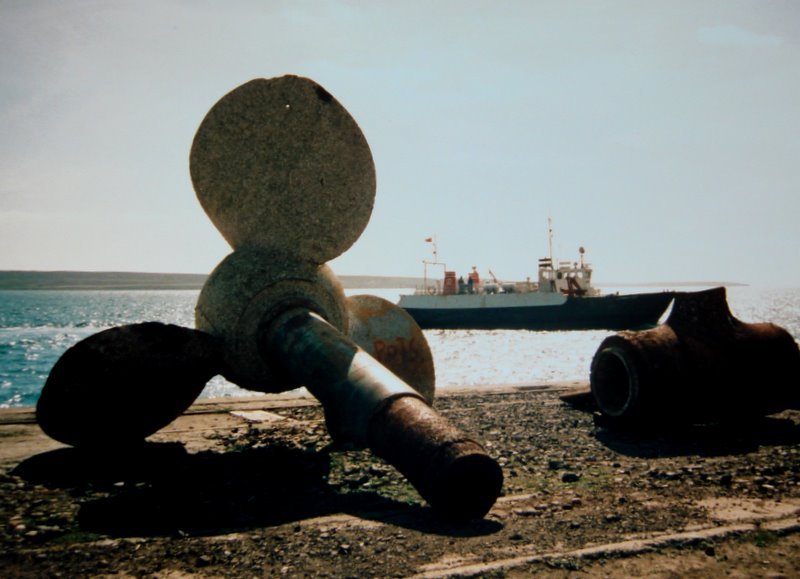
The weather was appalling with gale force winds and mountainous seas, but the mission was deemed so important to Britain’s war effort that the Hamshire, under the command of Captain Savill, had to sail immediately. It was a bad decision and the ship did not get far. An hour after setting sail, Captain Savill decided to call it a day and return to the safety of Scapa Flow. However at twenty to eight in the evening, the Hampshire was racked by a huge explosion that ripped out the middle of the ship. She was about one and a half miles from the shore between the Brough of Birsay and Marwick Head, when she rolled over and quickly sank, taking most of her crew of 667 to the bottom.
At the time it was thought that she had run into a string of twenty two mines laid by the German submarine U 75 commanded by Kapitanleutnant Curt Beitzen, who had been dispatched to watch the Grand Fleet as they left Scapa for the Battle of Jutland.
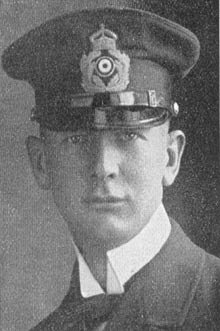
As the news reached Scapa Flow rescue ships were dispatched, but by the time they reached the area the Hampshire was gone, and only fourteen men in a Carly float reached the shore, two of them dying before they could be rescued. Over six hundred men were loss that terrible day. Many more would have been saved, but the life boats were smashed to pieces by the horrendous waves as they were lowered into the sea.
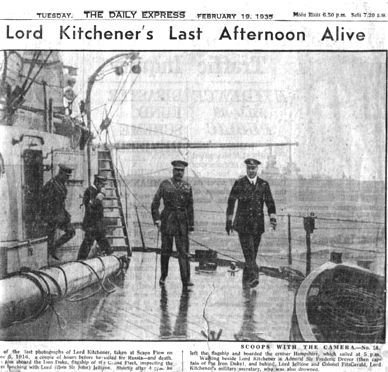
So what of Kitchener? Well many of the men who survived stated that Lord Kitchener was not killed by the explosion and must have made it to the upper deck, as they told to ‘make way for Lord Kitchener’. None of them saw him after that, and his body was never recovered.
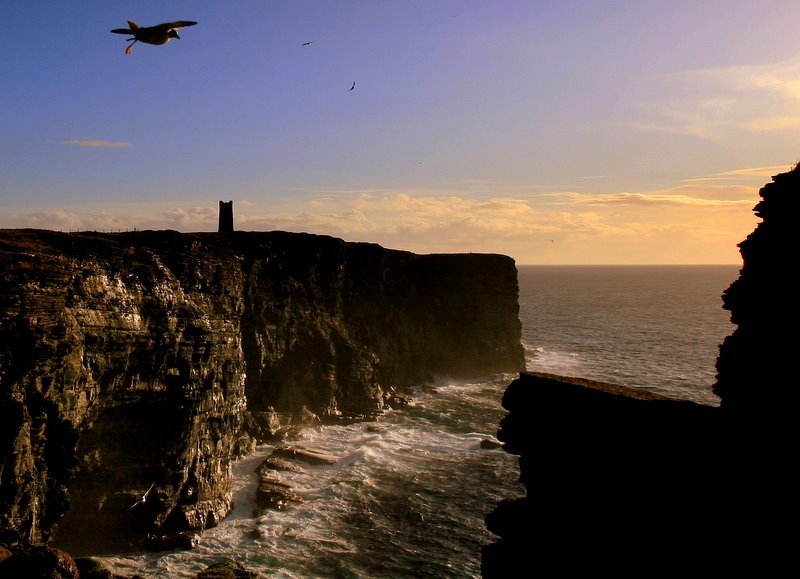
The money for the Kitchener Memorial was raised by the people of Orkney, and was dedicated in 1926. The inscription on the plaque says it all. This tower was raised by the people of Orkney in memory of Field Marshall Earl Kitchener of Khartoum on that corner of his country which he had served so faithfully nearest to the place where he died on duty. He and his staff perished along with the officers and nearly all the men of HMS Hampshire on 5th June, 1916. I am grateful to Brian Sandom for the following information and photos.
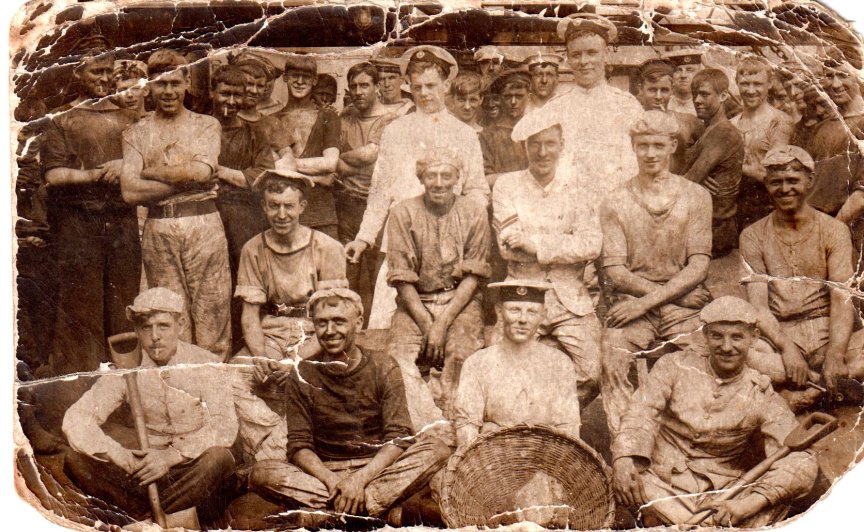
Some crew of the Hampshire, Gibert James Sandom is the very tall man in white wearing a Royal Marines hat.
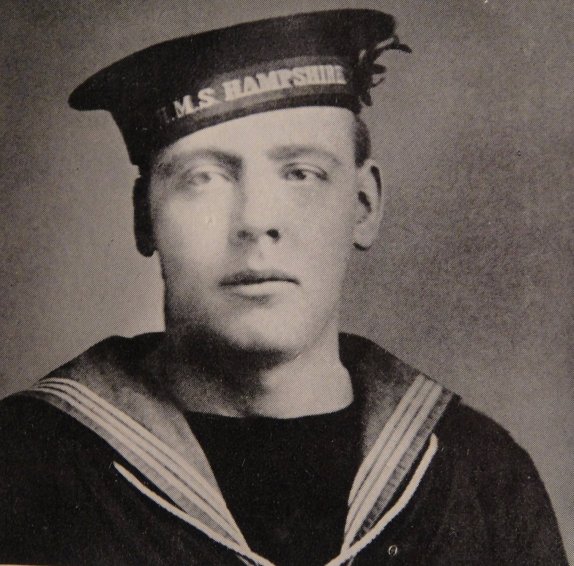


Brian Sandom says
My Uncle Gilbert Sandom, a Royal Marine, was lost on Hampshire, and presumably lies with his ship. I have served 23 years with the Royal Navy. I plan to lay a wreath over the wreck on 5th June 2011, the 95th anniversary of the loss, and my 79th birthday. I am researching self catering in the area, and would be very grateful to be put in touch with a fisherman or boatman that would be willing to take me out to the wreck for this purpose.
Risto says
As for Mr. Brian Sandom´s noble purpose, I have no doubt that some of descendant from than “people of Orkney” still living in the surrounding will help him to get along with the hommage to his uncle (RIP), and why not to say, to the rest of sailors remaining at their post watching for ever HMS Hampshire.
Fraternally,
Risto
Chile
Brian Sandom says
Thank you Risto. I most certainly will be doing that.
Jerzy says
@Brian Sandom: I’m sure the British Legion in either Kirkwall or Stromness would be pleased to be of any help too
Brian Sandom says
Thank you Jerzy. I am in touch with them, and also the Royal Naval Association in Orkney.
Lionel Tucker says
Very interesting to read all the comments regarding Brian Sandoms visit to Orkney next June, I shall be joining him on the trip, i am not a Naval Man,but spent the war years in the Army.
Looking forward to meeting all and enjoying your company
Regards
Lionel
Brian Sandom says
Further to my mate Lionel tucker. Although an ex Pongo, Dunkirk, and D Day Veteran. He is 94 years old. We both together with my Wife Del are so much looking forward to meeting as many people in Orkney as is possible.
Bill Holden says
Its very good to hear that a wreath will be laid soon in memory of those who died at sea abord H.M.S. Hampshire.
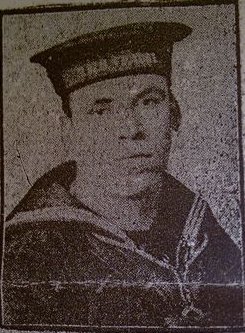
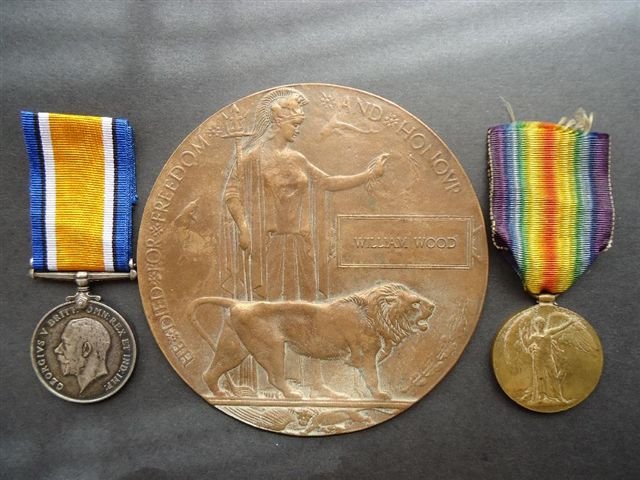
I have a set of medals to William Wood from Poolstock Wigan who was a stoker on the Hampshire, he was lost at sea along with Lord Kitchener and his staff,
Ive had the medals for a few years now, sadly his memorial plaque was missing, fortunately ive just recently tracked it down in Canada,im happy to announce the group are now re united.
The group will be on display later this year in an exhibition within Bolton Central Library.
The exhibition will run throughout November as a token of remembrance.
Brian Sandom says
Only 10 days to the off. It seems very unlikely that I will be able to lay the wreath on the wreck, but plans have been made to do so at the “Hampshire Memorial” in Lyness, thanks to the Secretary and Shipmates of the Orkney Branch of the RNA. This will give me closure on behalf of Gilberts Brothers and Sisters, sadly all gone now. Still a few of us Sandoms left though.
Brian Sandom says
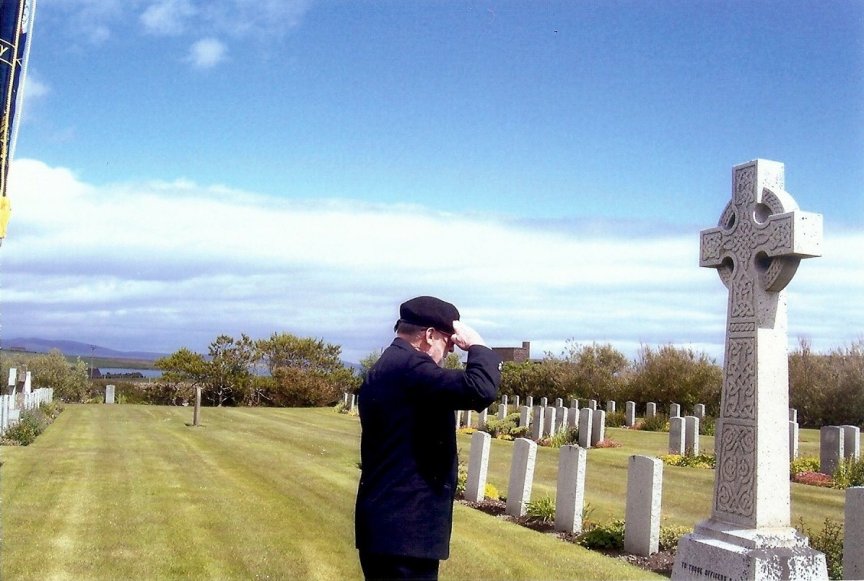
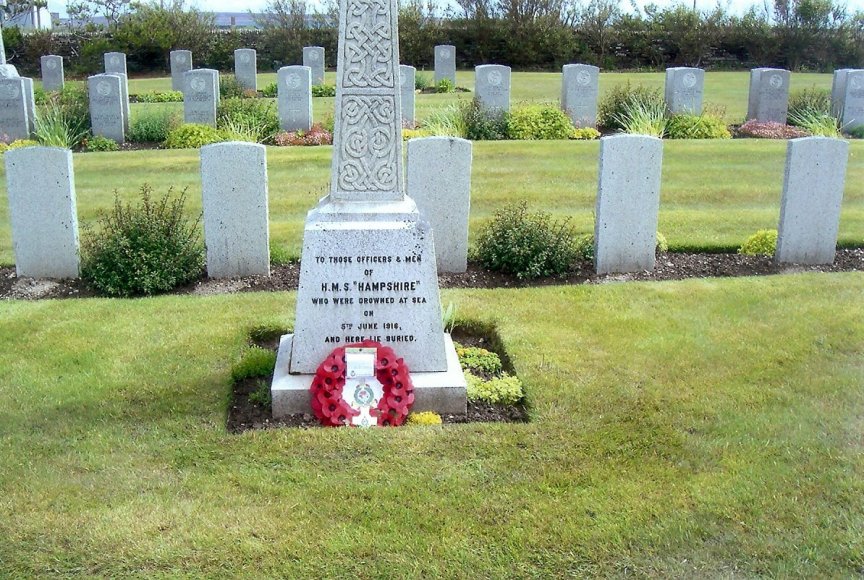
Well here I am back home from the magical place of Orkney with missions accomplished. As was expected the difficult task of actually getting to the wreck was not at this time possible, but on the 5th June we went to Marwick Head and crosses were laid at the Memorial to Lord Kitchener there. On Monday 6th my wreath was laid on the “Hampshire” memorial in the RN cemetery in Lyness. I was puzzled to find graves marked to unknown Royal Marines of Hampshire there, as my family were never told of this, at least to my knowledge. We were always led to believe that he lay with his ship. Any info on this would be very welcome. Brian Sandom
Brian Sandom says
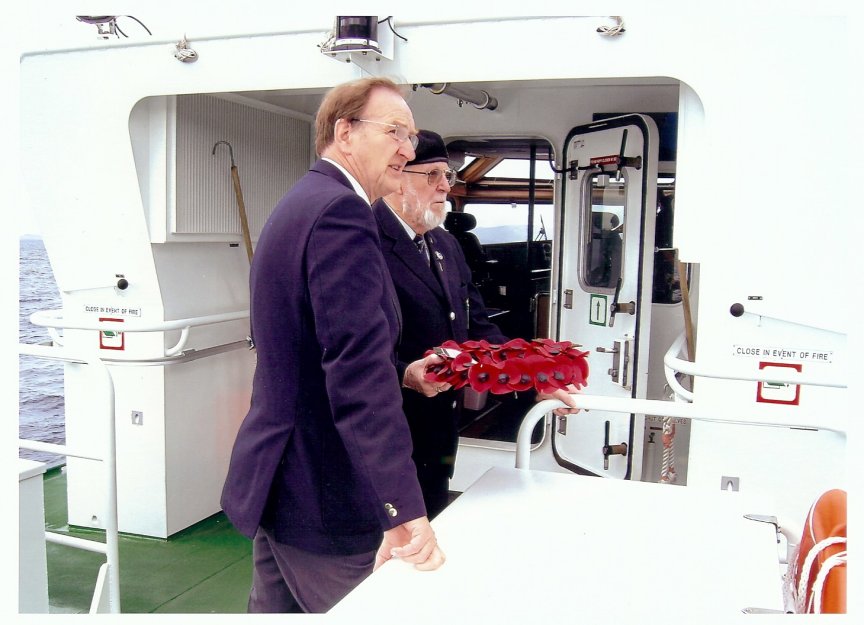
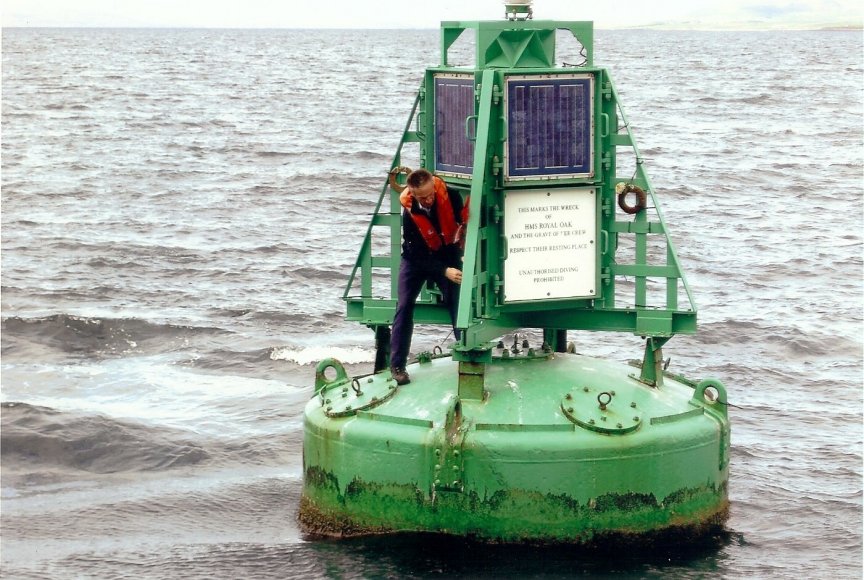
Sorry, I forgot to mention that I laid a wreath on behalf of the “Royal Naval Association” Netley at the wreck buoy of HMS Royal Oak. All this could not have been possible without the help of the Chairman of RNA Orkney Shipmate David Hughes.
I cant wait to go again. Brian Sandom
Edwina says
My great uncle was William Wood from Wigan I have the original plaque and a family mystery story if Brian is interested
Ione says
Thank you for your beautiful sentiments and memorial activities… I’m currently researching and writing about Lord Kitchener..
p bartram says
My uncle George Edwin Smith died on Hampshire. Am hoping to go to the Orkneys this year. I want to do what my father always wanted to do but never managed to.
Mrs Maureen Boog says
Recent media news on Kitchener jogged my memory,my Deceased Mother told me that her brother went down with the ship ,only know the surname which was Warren .Be great to hear of any list of crew lost and see if any info matches .
Carole Johnson says
My Great Uncle was a personal servant to lord Kitchener, his name was Walter Gurney and it has taken a long time to find his name mentioned anywhere as he was a civilian and not military, but he went down with the Hampshire and it my intention to visit Orkney and see the memorial and the cemetery for myself as soon as I can, It would have been wonderful for my father to go but he is ninety two now and quite frail. He lost all his three uncles in the first world war.
Melanie says
My Great Uncle Eric F.H.Robinson was lost on HMS Hampshire barely 18years old. I have been doing a lot of research on this as part of my family history. Eric is going to part of an exhibition later on this year to commemorate the beginning of the WWI I would really like to go and visit Orkney to pay my repsects to him and all the others who were lost. Thank you Brian for going on all our behalfs
Dave Caampbell says
My Father was from Stromness and saw the explosion.He was also a Veteran of the First War..Of the many things he brought to Canada ,I have a copper nail from the ship and a Reward poster requesting information or the location of Kitchener’s Dispatch Cases.This was posted in Wm Shearer’s Store in Stromness.I would like to hear from anyone who is interested in this,especially the Stromness Museum.
Adrian Inman says
My Great Uncle lost his life on the Hampshire. A member of Lord Kitchener’staff. He was Driver D. C. Brown RFA & RHA. Servant to Lord Kitchener. His initials D. C. stood for David Cliff. I have for a long time been searching for any photographs of him without any success. I have the book “The Mystery of Lord Kitchener’s Death by Donald McCormick. Driver Brown is mentioned also Walter Gurney. This will be of interest to Carol Johnson and just by a coincidence Gurney was my Grandmothers name.
Adrian Inman says
My Great Uncle lost his life on the Hampshire. He was a member of Lord Kitchener’s Staff. He was Driver D. C. Brown RHA & RFA. (D. C. stood for David Cliff) Servant to Lord Kitchener and Brigadier-General W. Ellershaw. I have searched for photographs of him but been unsuccessful. I have read The book “The Mystery of Lord Kitchener’s Death by Donald McCormick and he is mentioned on page 11 along with the rest of his staff including Walter Gurney which will be of interest to Carole Johnson (3rd. comment above) And just a point of interest my grandmother’s maiden name was Gurney.
Inga Holmes says
I wanted to know if T.S PEACE, architect, designed the memorial.
I am his only granddaughter and have been there several times from
Australia. Would be very grateful for information.
J. Corbett says
Just found this page. Researching my relatives, I came across William Browne stoker, who would have been my late Fathers cousin. I learned he went down on the Hampshire. Hoping to find a pjoto of him in uniform. He was born in Belfast, and listed an O’neill woman as his adopted Mother.
Thanks for the insight on this page.
Brian Sandom says
nyone heres of anything I would be grateful. Brian Sandom
Brian Sandom says
Sorry I over wrote. I did say that I visited once again in 2012 on my 80th Birthday. Am planning to go again in 2016 fore the 100th Anniversaray. I am aware that something is being done to the memorial on the hill, but at my age I wont be able to make it to there. I am hoping that there may be some sort of vessel (possibly RN) may carry out a re enactment of her last hours. Brian Sandom
Rebecca Willing says
Hello, I am doing some research on my family history. my great uncle Henry Walter Sharp was aboard the HMS Hampshire when it went down. Im wondering if anyone may have any information on him. I have 1 photograph and the death penny that was sento my great grandparents. I would reallu appreciaite any photos or information that would help me with my hunt. Many thanks in advance
Brian Sandom says
Following a letter from me to FOSNI (Flaf Officer Scotland & NI) I have received a pesonal letter from Rear Admiral John Clink O.B.E. confirming that the Royal Navy are planning something for the 100th. I am to be kept in the picture and will keep this site up to date. Brian Sandom
Ken Houghton says
My great uncle, George Houghton, was aboard HMS Hampshire when it went down on the 5th of June 1916. My wife, family and I will definitely be coming to Orkney for the 100 year commemoration and would be grateful for any information about any events planned for the commemoration.
Peter May says
Glad to have found this site. My Great Uncle Col O.A. Fitzgerald was lost in the sinking of the Hampshire. He was Kitchener’s Military Secretary and long time companion. His body was found and he was given a virtual state funeral in Eastbourne
It has long been my intention to go to Orkney for the 100th Anniversary.
Can anyone give me details once they are known. Many thanks
Brian Sandom says
I have no further update on the Royal Navy partaking in the 100th, but have now learned of 2 more men lost in the sinking. Both relations of friends. Stoker Petty Officer Frederick C Mullans, and Petty Officer Hockless. We are all booked for the visit, and will be driving up from Southampton. My 84th Birthday on the 5th as well as 100th.
James Irvine says
I am editing a book to commemorate the centenary of the loss of HMS Hampshire and would like Dave Campbell (and anyone else who has inherited relics or first-hand accounts of the events on the night of 5 June 1916) to email me at jamesmirvine@hotmail.co.uk
Brian Sandom says
I have now had a communication from the Royal Navy re the 100th. A Navy Ship will lay a Wreath on the Wreck at about the time She was hit. At the same time a Memorial Service will be held in Birsay. Sadly it will not be possible for anyone to proceed with the Ship. Wreaths of course can be laid in the Cemetery at Lyness, where there is a Memorial to the Mem of the Hampshire, and also the Graves of one or two, although not named.
Connie Odendaal says
I am sorry for the great many lives lost when the HMS Hampshire went down. The tragedy lives on, as that of the Titanic. My relatives fought and died during the Second Boer War, but forgiveness heals and brings inner freedom.
Steve Lloyd (Trust Manager) says
Detective Sergeant Matthew McLoughlin of the Metrolitan Police Special Branch was the personal bodyguard assigned to protect Lord Kitchener. He was also killed on 5th June 1916 when their ship, HMS Hampshire, sunk of Orkney.
We can confirm that there is a centenary Service of Remembrance to commemerate all those lost in the sinking. It is taking place in Orkney and the police service will have a representative there to lay a wreath.
James Irvine says
The Orkney Heritage Society have just announced their intention to publish a book entitled “HMS Hampshire: a Century of Myths and Mysteries Unravelled” on 31 August 1916. For details of pre-launch offers, and the opportunity to contribute a brief anecdote, see http://www.orkneycommunities.co.uk/ohs/index.asp?pageid=649435
James Irvine says
Ch-ris: please e-mail me.
Brian Sandom says
I suspect that all will have the plan for the 100th Commemoration. Service in St Magnus Cathedral at 1100. Reception in Birsay Hall at 1330 with HRH Princess Anne. Service on the hill at Kitchener Memorial which will culminate at 2015 the time when Hampshire struck the mine, RN Ship will lay a Wreath on the wreck at this time. We are all booked for the visit and will stay a week.
Jennifer Spencer says
My Grandfather, Edwin George Spencer, died on the HMS Hampshire at the age of 23, he was an Electrical Artificer. Is there an association for the HMS Hampshire that I could contact? I am very interested in the fact that it will shortly be 100 years since the ship went down & wondered if any new facts will be released at that time.
Thank you, Jennifer Spencer.
Simon Scholes says
i have just found this link. it`s been a little quiet as tonight , now, exactly is the moment the Hampshire went down. I have a dear friend who is attending the 100th memorial to HMS Hampshire.
…let they never be forgotten..
Michael Credland says
I am preparing an exhibition on HMS Hampshire. I have recently purchased the medals, Next of Kin memorial plaque & scroll and letters relating to PO13316 Pte Walter Theophilus Farthing RMLI who was born at Northampton in June 1882 and drown aboard the Hampshire on 5 June 1916. I will be extremely pleased to hear from anyone who has any knowledge of Walter and particularly has a photograph of him.
James Irvine says
The book “HMS Hampshire: a Century of Myths and Mysteries Unravelled” is now with the printers, on schedule for its launch on 30 August. As well as the history it includes detailed illustrated accounts of the recent dives on the wreck and the Centenary Commemoration events. Pre-launch offers are still available at http://www.orkneycommunities.co.uk/OHS/index.asp?pageid=649435
Andy Moir says
I visited the Kitchener Memorial yesterday and it is a fitting tribute to those poor souls lost that fateful night in 1916.
I’m not (so far as I’m aware at least) related to anyone lost when the ship went down, but I’m here in Orkney on work related business and felt compelled to stop and walk up to the memorial as I drove past, and I’m glad I did.
The cliffs are stunning, the memorial magestic and you get a real sense of the magnitude of what happened that night as you look out over the sea.
Apologies if I’m deemed to be intruding here, but would thoroughly recommend taking the time to visit the memorial if you are ever fortunate enough to visit Orkney.
Margaret Scott says
This is a message for Brian Sandom, as I don’t know how else to contact him, thank you.
Dear Brian, I hope you are well.
I am trying to find a photo of my Great Uncle Albert Munton who was a 1st Class Stoker on the HMS Hampshire. He died that fateful night when the ship went down in 1916.
Although I never knew him, he is very precious to me and my family and we are very proud of him.
I was wondering if you know if he is on the photo you have posted (on this site) of some of the crew. If he is, please could you tell me which one is him, thank you.
I am trying so hard to find out as much as I can about him and have gathered some information, but to have a photo of him would mean so much to us all.
Thank you, Brian, for taking the time to read this message, I really appreciate it.
If you want to contact me directly, the email address to reach me via is: poppylouise@outlook.com.
I look forward to hearing from you soon.
Take care.
Yours sincerely
Margaret Scott
Jude Wood says
This is a letter for Edwina who posted her information on 13 January, 2013.
Dear Edwina
William R Wood, your great uncle, was my late husband’s grandfather. Pete only found him three years ago after an extensive genealogy search. Sadly, no one in his family knew much about him due to his two sons being extremely young when he died. Tragically and very quickly after his death, his wife died too, leaving two young children – Jack and Arthur – to be brought up by relatives who told them little about their father, probably because they knew very little themselves.
These are the things we want William R Wood to know, to make him feel proud. To tell him that life went on extremely well for his family after he died.
Despite William’s sons start in life, they both grew into very fine men, and we all loved them dearly. Both signed up to fight for Britain at the start of WWII: Jack flew in Lancaster bombers and Arthur followed in his father’s footsteps by joining the navy. Arthur survived two torpedo attacks on the two ships he sailed on and lived to tell the tale, many tales.
Jack had two children, wonderful children: a boy and a girl. Both studied at university and excelled in all ways of life. My husband Pete received a doctorate in immunology and went on to teach at various academic institutes both in Britain and the USA. He was the author of an amazing book: ‘Understanding Immunology’, a book that has helped many understand the mysteries and magic of this incredible physiological phenomenon. Sadly, he died in December 2016 and is greatly missed.
William also has two great grandchildren, a boy and a girl, both of whom have excelled in all walks of life too, and he also has a great great grandson who is at present a babe in arms.
I have recently visited the Orkneys and the museum on Hoy. There, in the corner that is dedicated to HMS Hampshire, I took a long moment to thank William Wood for giving me my fabulous in-laws, Jack and Kirsten, and a lovely, fun loving uncle (Arthur), and my beloved husband and our wonderful life together.
It has been a great surprise to know Pete and his sister have a relative of their generation, someone who could possibly help separate myth from truth. We would love to know more about William. If you feel comfortable contacting us, we would be very grateful. I can be reached by email: judeserlewood@btinternet.com.
Kindest regards
Jude Wood
Craig Albiston says
I would very much like to learn more about Walter Gurney as I believe he had a connection to my Gurney relatives who lived in Rugby, Warwickshire.
Kind regards,
Craig Albiston
clalbiston@aol.com
Barbara Clarke says
My Great Uncle Henry Jeffries 1st boy was only 16 when he died on that faithful day. I never had the chance to meet this amazing young lad.
Never to be forgotten,
Margaret spratt says
I was told years ago that my great grandmother named Margaret Gibson who lived in seaton Delaval northumberlandlost a son w Gibson, who went down with kitchener ship but his body was never recovered from the sea. I am in my 83rd year now, and would like any information on william Gibson. His parents names were Anthony Gibson and Margaret Gibson( nee Rose) i believe w Gibson was in the engine room, but not confirmed. Rip .