
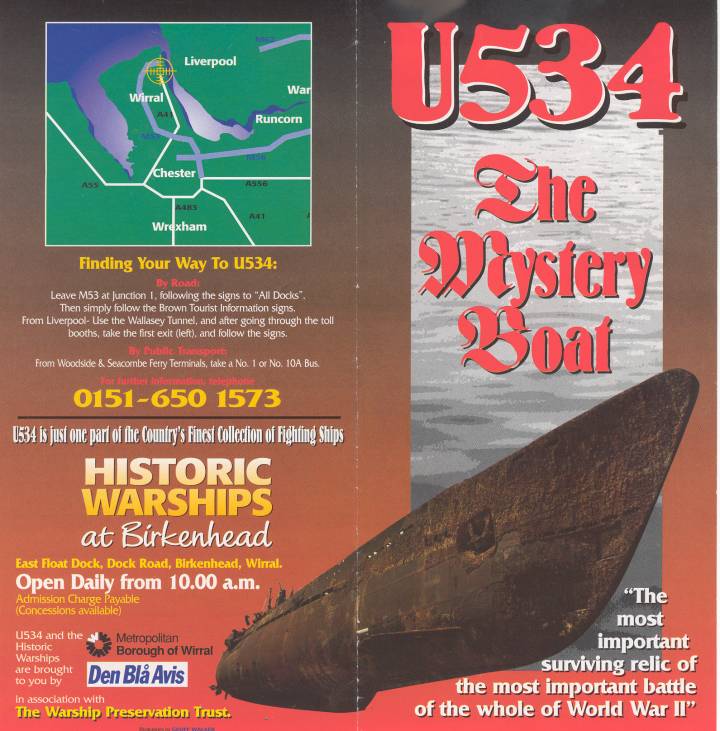
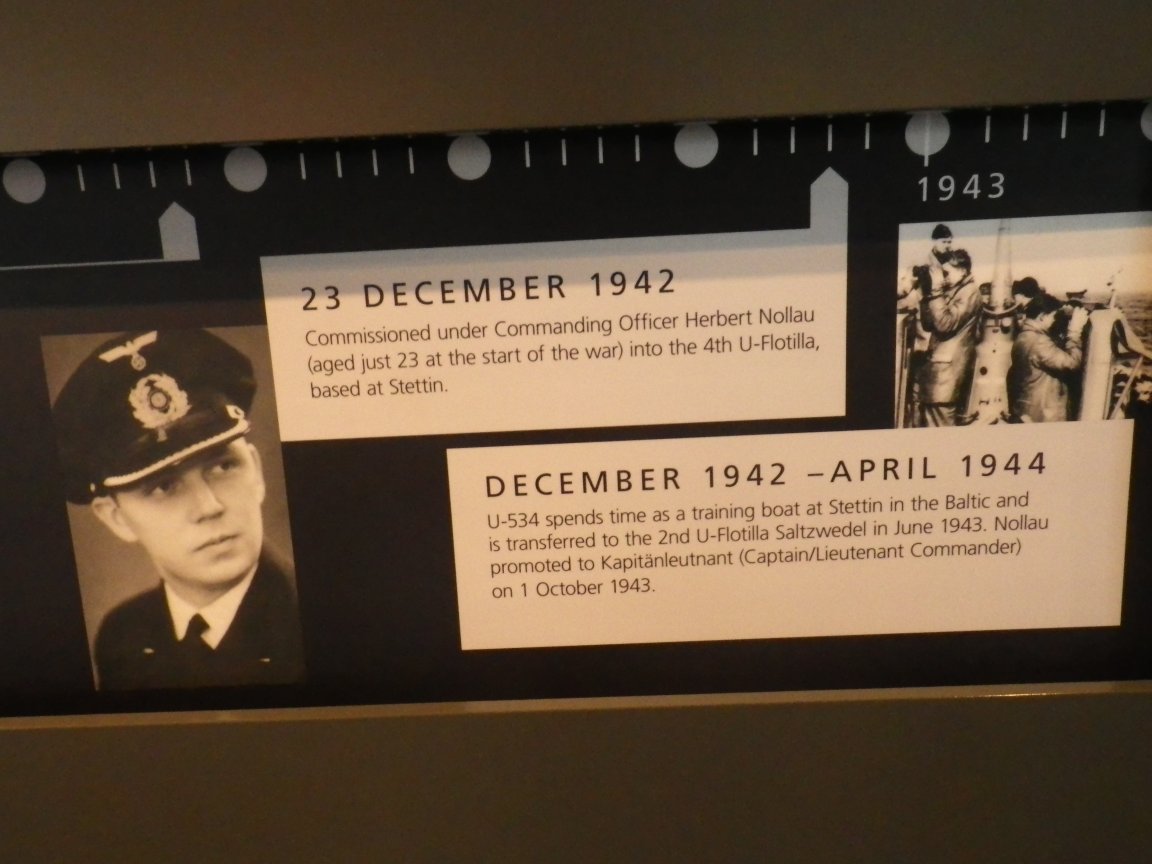
Commissioned in Hamburg in late 1942, the U 534 is a Type IX C 40 long-range ocean going submarine. She was mainly used as a weapons testing platform, and until the late summer of 1944 was also used as a weather ship in the North Atlantic. During the autumn of that year she left the massive U. boat pens at Bordeaux and sailed back to Germany where she was laid up in Kiel. So far nothing out of the ordinary, just another U. boat. But during May 1945 things changed.
Germany unconditionally surrendered, and the War was over. However just before the surrender, on May 2nd, U. 534 became the last submarine to leave Germany. Apparently she had been specially provisioned and armed in the bombproof pens at Kiel weeks before, and at the appointed hour she slid silently out of the submarine pens and made her way towards Kristiansand in Norway. Two days later on May 4th, Admiral Doenitz had ordered all submarines still at sea to surrender, but by then U 534 was lying submerged off Elsinore in Denmark. Weather her Commander, Captain Nollau failed to receive the order or chose to ignore it is uncertain, but either way the outcome was to be catastrophic.
On May 5th, the day after all German forces in Northern Europe surrendered, a R.A.F. Liberator from Coastal Command sank U 534 off the Danish Island of Anholt. Most of the crew managed to abandon the boat and were soon rescued, but five were trapped inside the U-boat and were dragged down by it. Miraculously they managed to escape their iron tomb, but one died in the ascent, and two others drowned on the surface before the rescue ships could get to them. So where was the submarine going and what was its mission?
U 534 had a range of over eleven hundred miles, so could have easily reached South America. Was she going to carry a leading Nazi to South America via Norway? Or was she carrying treasure looted from the occupied countries to help those Nazi who had already escaped to South America by other routes? One of the crew that died shortly after the U534 sank was an Argentine wireless operator, which suggests that she was indeed en route to South America. The only person who definitely knew was Captain Nollau and he never told, taking the secret to his grave.
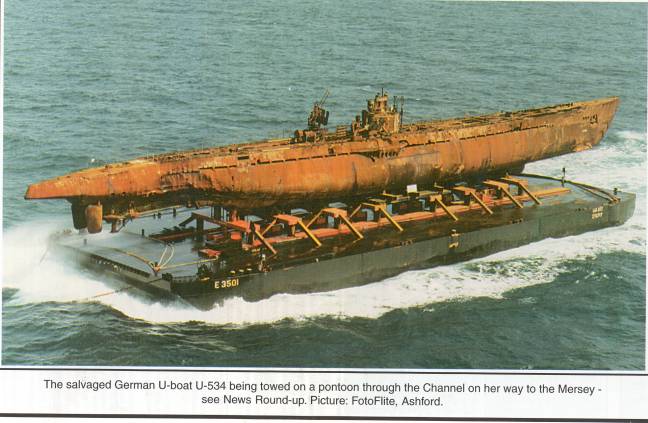
As the years rolled on, the rumours became more persistent and the accounts of the treasures supposed to be on board ever more extravagant. More than forty years after she sank a Danish diver, called Age Jensen found U 534 and once again the rumours started to fly. In 1992 a Danish publisher, Karsten Ree became interested in the submarine and decided to mount a salvage operation to find out once and for all what the Mystery of the U 534 was all about. The expensive lifting operation lasted over four weeks with the close co-operation of the Dutch Navy. After five tons of explosives were removed the submarine was moved to Grenaa where she was loaded onto a huge barge and towed to Birkenhead. Besides the explosives there was about two tons of documents. No gold. No paintings and no jewels.
So what was going on? Watch this space.
The Tour.
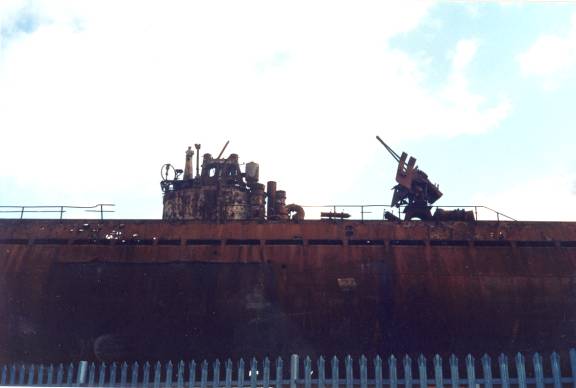
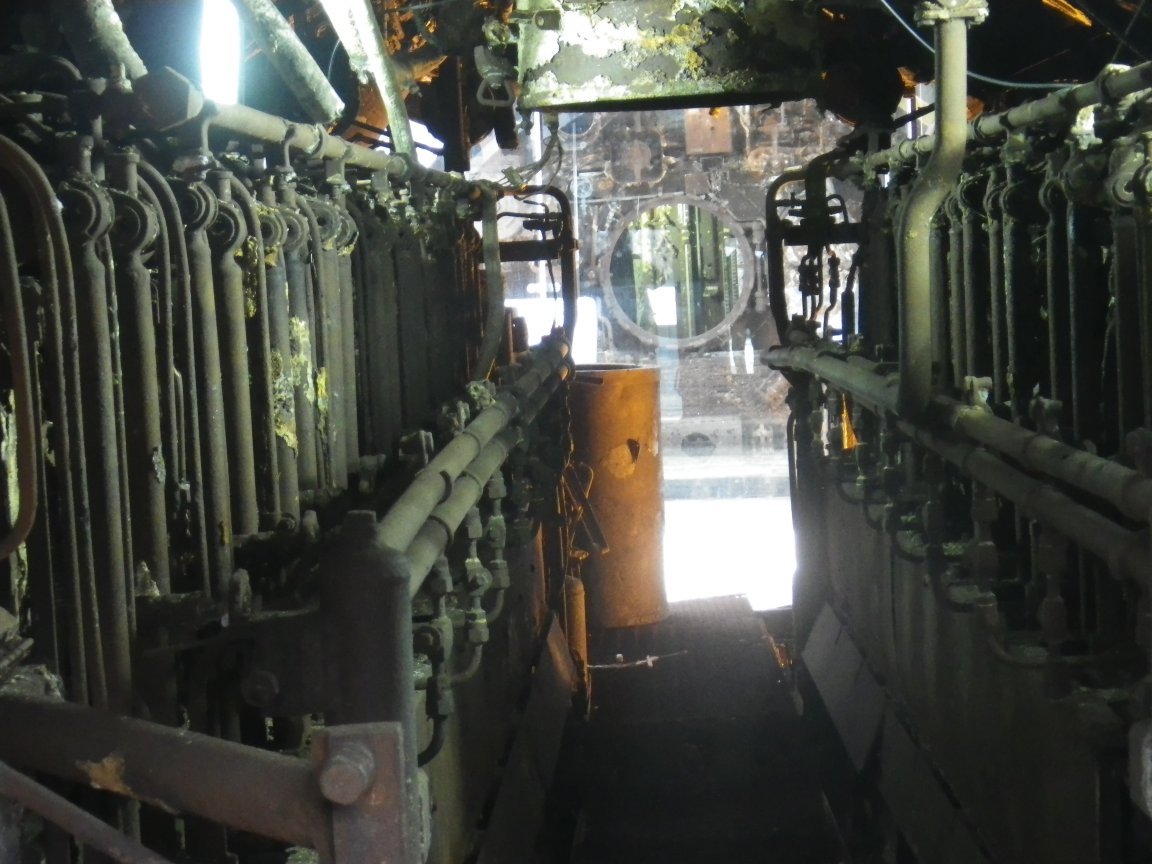
When I first visited the U 534 she was still in a very poor condition. The Warship Trust had only just got her and took only a limited number of very small groups around personally as the inside of the sub was pitch black and quite dangerous underfoot. I thought this was a great way to see her, almost just out of the sea. Inside the submarine still dripped with water from rain penetration and oozed a film of condensation that shone eerily in the powerful torch light. The menacing dark shadows that lurked at the perimeter of the light gave our small party just a glimpse of what it must have been like in those last few hours.
How to get There
Stuck all over the boat wedged into the pipe spaces were old tins of food, bits of newspaper, and the odd bit of clothing. The guides were very knowledgeable, but all the technical guff washed over me because the sheer experience of being in that dark, dank submarine was so evocative. How the crews on both sides hid their fears and endured the dreadful conditions inside the boat must be incomprehensible to people today. No wonder these old submarines still exert such powerful emotions.
When I went to see the sub, no photographs were allowed to be taken inside, but this great website did, and the inside is just as I saw it. Well worth a look.
In 2006 the Warships Preservation Society went bankrupt and sold of all the land for development and dispersed the ships. The U534 however was cut into sections and moved to a new purpose built museum at the Woodside Ferry Terminal. Below is a link to their website showing times, prices, and how to get there.
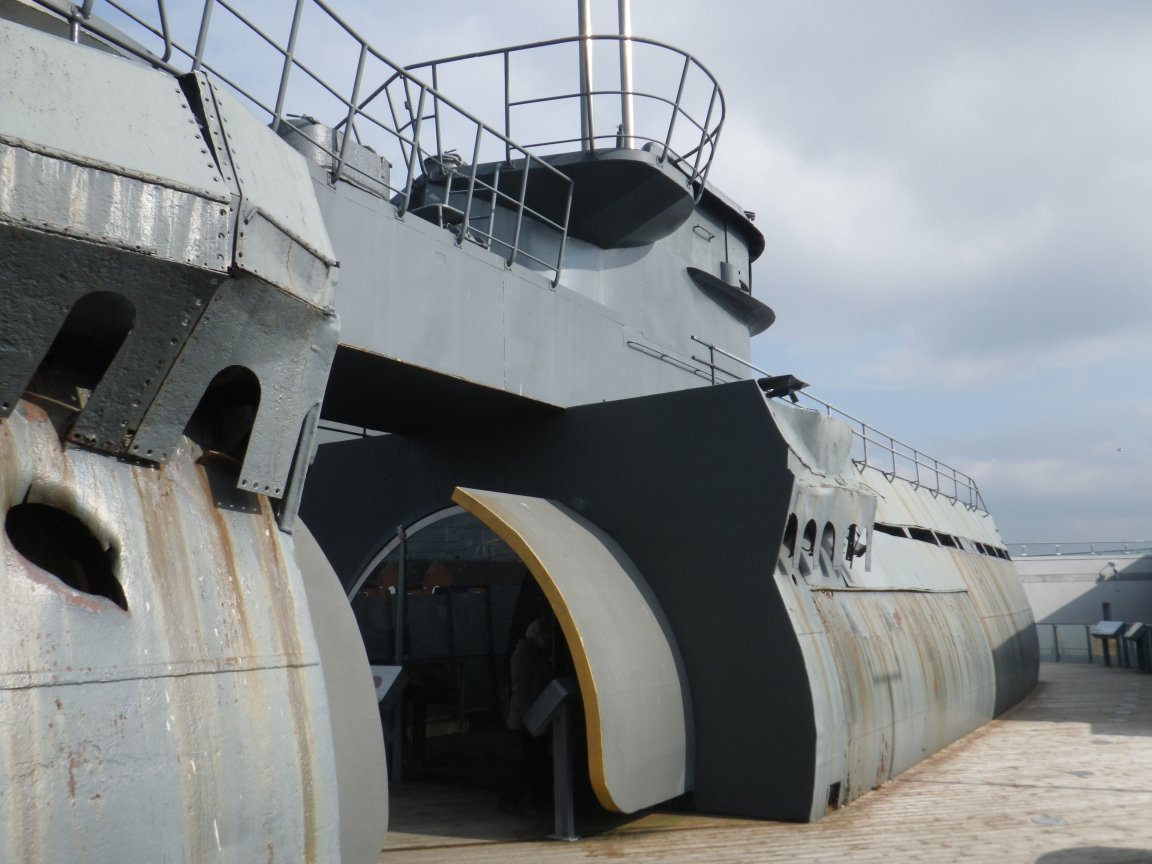
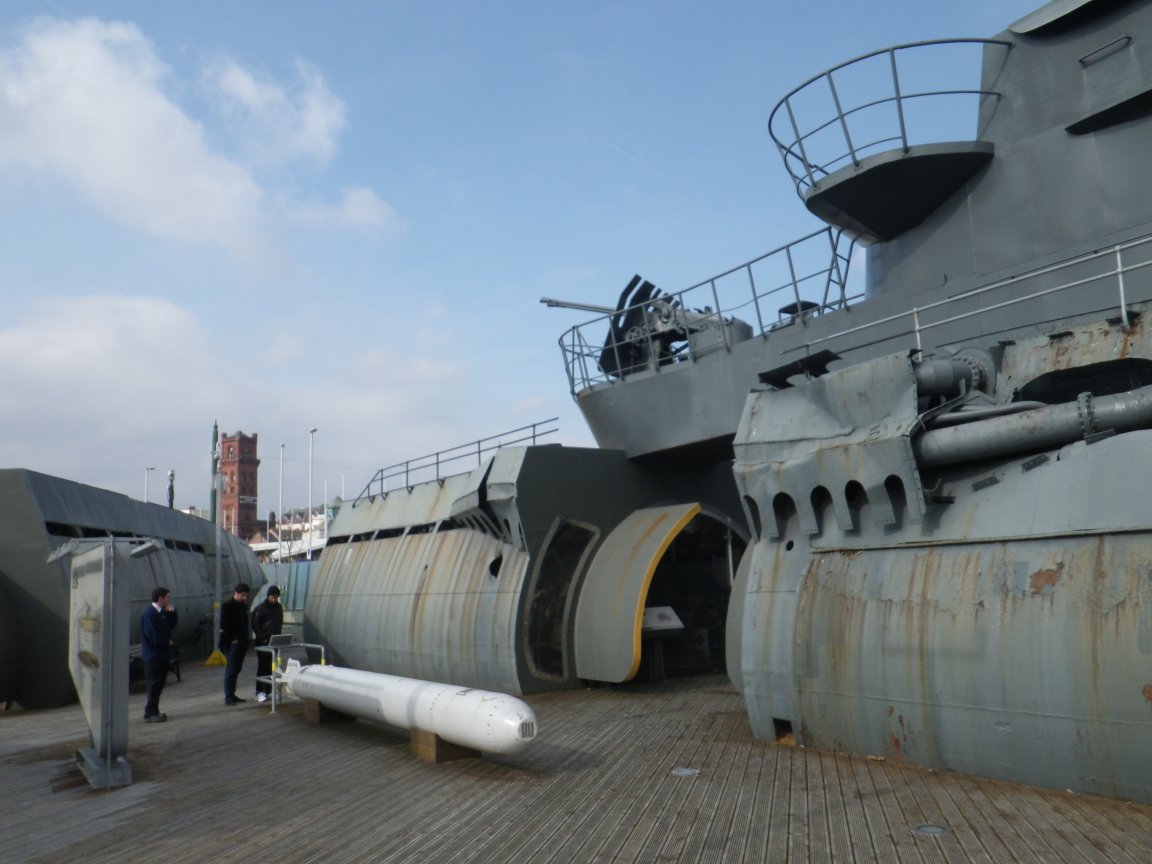
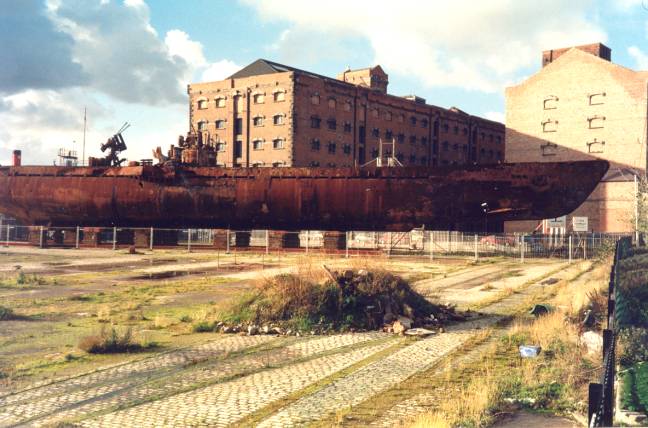
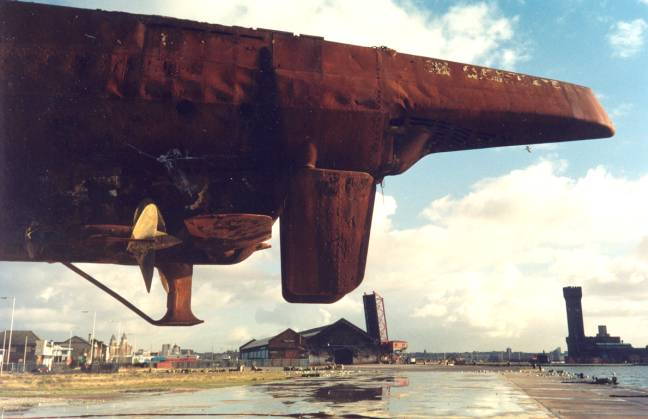
A few years after I saw the sub, the whole area was cleared to make way for apartments and houses. The U534 was by now in a parlous state, literally rusting away. There was no way that it could be stabalized to make it into an exibit. Even moving it was cause for great concern as it could just have disintegrated. A very bold move was made to cut it into three pieces and cocoon parts of it so that you could look inside. Some artifacts were removed and put on permanent display at its new home at the side of where the Birkenhead Ferry comes in.
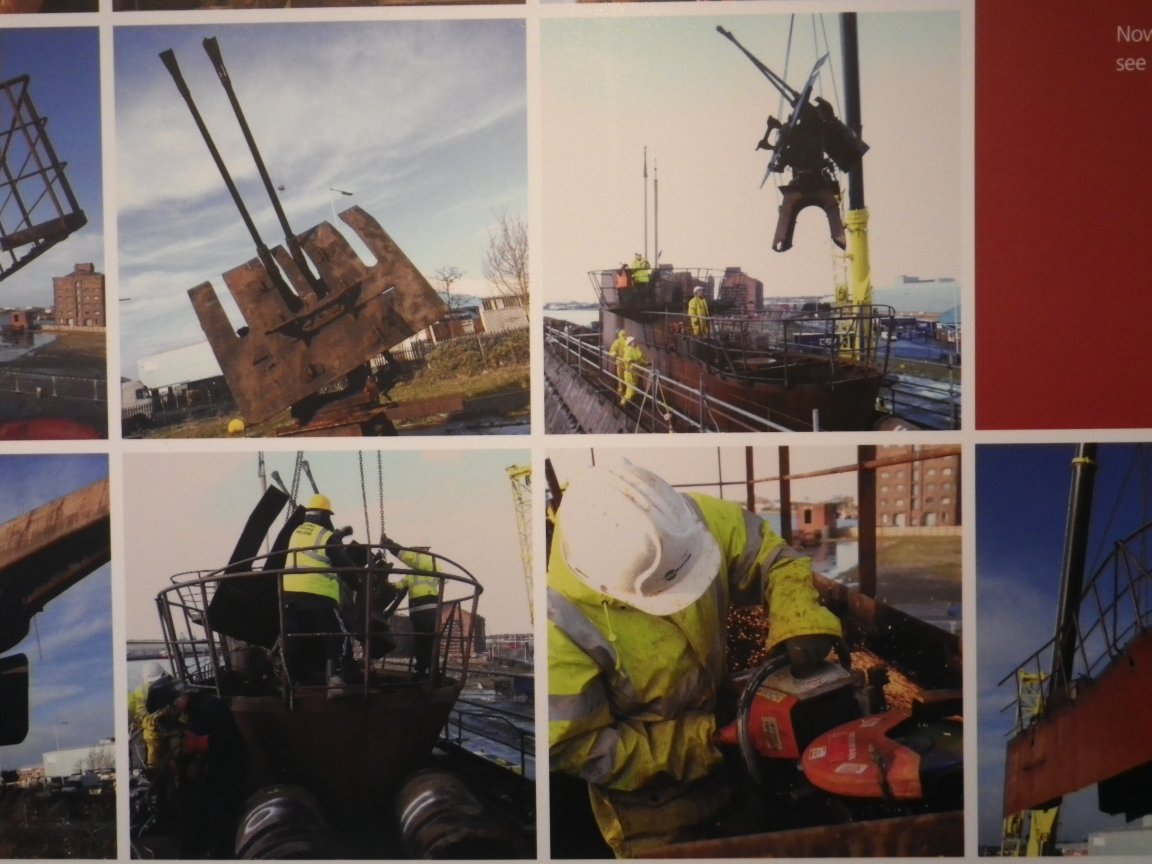
When I heard about this I was appalled, but I went to see it in 2013, I found that the Company responsible, had made a very good job of it. The museum is full of interesting small bits and pieces and there is a lot of information about the sub and how they got it up and conserved it. Considering that the sub could have been lost forever, its a job well done.

David says
I think this is realy cool, the fact that the writer had a tour of the sub shortly after being recovered makes me green with envy. I feel that any of these old U-Boats that are still in one peace should be restored and put on display so that we can all have a wounder round them and see for our selves how brave the men were who crewed them.
John Stokes says
I have been to the sub u-534 and seen it in all its glory, sadly its been cut up into four peices but having said that the experience was awesome. The men that managed this beast must have been so brave and i envy them for that, german or not. Why did this UBOAT refuse to surrender, we will never know but i suggest that if you have an interest in this sort of thing you go along a have a look at a fantastic peice of history. In my opinion it should of been restored to its former glory but at least its still here for us to observe and i thank them for the chance to see it. The museum is also fantastic showing all the personal items that the crew had aboard. There is also a 24ft torbedo on show and two EGNIMA machines that were found on board. All in all a fantastic day out.
Kota says
Hello, i am looking to possibly purchase a submarine in the near future, i
i am looking to possibly get a German U-Boot or a Balao Class american
submarine, if you have any knowledge as to where i might possibly find
one of these majestic vessals please email me at Sethwolf17@yahoo.com NO SPAM EMAIL!!! and title it U-boat1 or i will delete it!!!
Thank you
PvdL says
War obviously has the effect to get out of people what is really in them: If they are brave and selfless, it will show; if they are sneaky and selfish, it will show. A lot of technical stuff gets invented along the way, that also proofs valuable once peace is restored. Hence war could actually make sense, if only nobody had to be maimed or killed for real.
Nigel Shuttleworth says
I too visited U534 shortly after she arrived to Birkenhead and went on the tour- see weblink above for photos. She was raised on 23rd August 1993 by the Dutch salvage company Smit Tak in an operation funded by publishing magnate Karsten Ree . The event was watched by 8 survivors from the U534 and 4 of G-George’s crew. Unfortunately no Nazi gold was found when the wreck was brought to the shore on its barge. Following a great deal of controversy in Denmark and for fear of upsetting their German neighbours, U534 was transferred to the Warship Preservation Trust at Birkenhead in 1996, a fitting resting place as the Mersey had been the destination for the majority of trans-Atlantic convoys which had suffered so much loss from the Uboat Wolfpacks in WW2. Unfortunately when the Warship Preservation Trust went into liquidation in 2007, U534 was acquired by Merseytravel Ltd. who with complete disregard for such an important piece of maritime history and in an unparalleled act of mindless vandalism to one of only 2 IXC Uboats still in existence, they promptly cut her up into 5 pieces!
Ricardo Inclan says
Great pics ! Great history !
Tks for sharing !
Mexico City.
Simon Gunson says
Can anyone comment please on claims that U-534 either made or was intending to make a voyage to Japan via Arctic waters?
I have trawled Russian online sources & discovered in Soviet times at least one U-boat visited a secret U-boat base in the Lena River Delta. It was noticed by a helicopter crew who stopped to investigate. The base comprised a concrete wharf with narrow gauge rails leading to five caves dug into a bank nearby. Inside four of these were found stockpiles of Nazi fuel drums. The uniform & badges of a German naval NCO were found in the area no doubt the victim of a polar bear attack.
Alan Gray says
I was born in Wallasey in 1947 but have lived in Tasmania, Australia since 1971. Not long after U534 was raised and put on display I visited my home town with my uncle from Norfolk who was a sub-mariner (after the war) and we had a marvellous experience because we went inside the sub and experienced the cramped conditions. This was when it was still in one piece in WALLASEY docks not Birkenhead as always published. I am very pleased it has been maintained rather that left to rust away – cut up means more people can see the insides. When it was first put on public display there was an original light globe that still working and the wood work in the higher levels was still in good condition because the airlock above the water line didn’t affect the higher parts. What a fantastic exhibit – I am looking forward to seeing it again if I can make the journey from Australia again.
Bill Leslie says
Does anyone know the name of the Argentine radio operator? I’m a writer and there must be quite a story associated with him
marion hebblethwaite says
I have written about Roderick Borden Gray GC whose plane was downed by U534 – and the captains log tells how it happened but assumed that all had died but thanks to Gray some survived – now I need to go to Birkenhead and see things from the other side – not often you see both sides of an attack
GARY CROFTS says
Thank you for sharing Peter.
RIP.
Morten says
Argentine operator
ENDEMANN.
Dr Cyril Watson says
Not clear. Is U534 still located in Birkenhead. Or is it across the Mersey in Liverpool now. Can it be visited.?