
On the 29th March 1930, the submarine L 1 came adrift from its tow and drifted without fuss onto the rocks at Penanwell Cove, near Porth Nanven in Cornwall. The submarine, a veteran of the First World War, had been launched by Vickers at Barrow in 1917 and at the time of her stranding had been on tow from Chatham to Newport in Wales for the purpose of being broken up for scrap. It wasn’t worth trying to refloat the submarine, so she was scrapped where she lay.
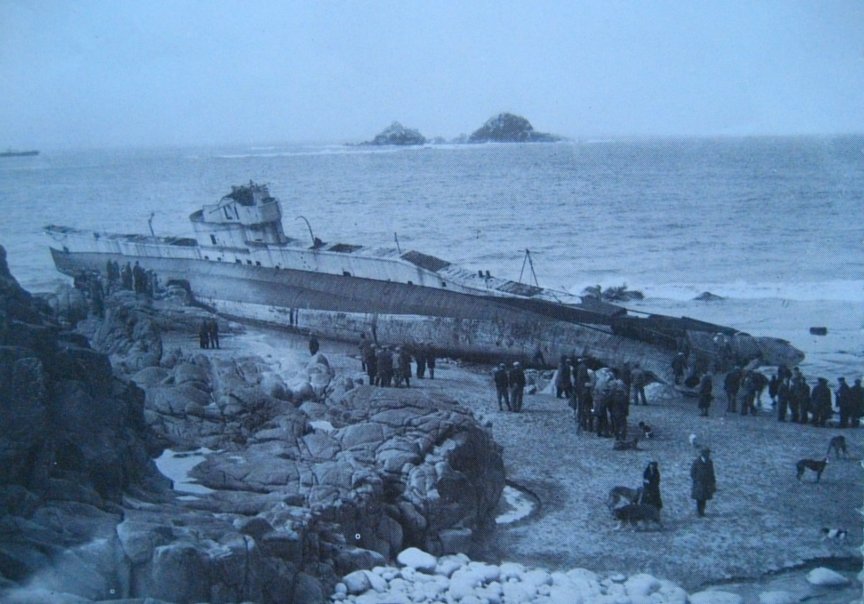
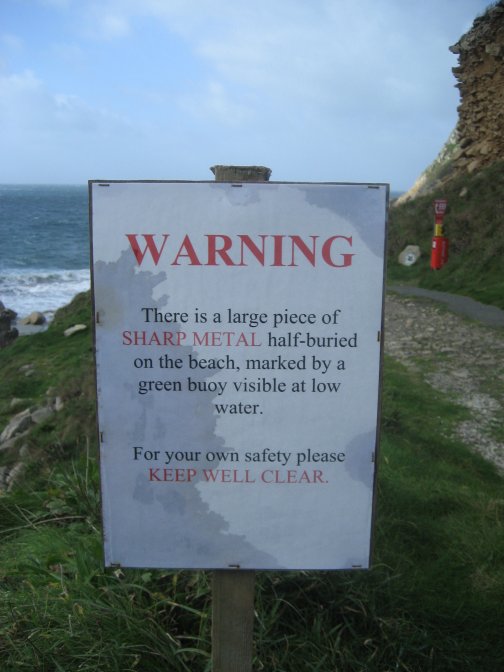
Now I would have thought that any evidence of her would have disappeared after all these years, but not so. There is still quite a big piece of metal left half buried in the sand, so much in fact that the National Trust, who owns the Cove, have marked it with a buoy and put some warning notices up. You can’t really see anything until a spring low tide, and I arrived at the wrong time, because the tide was still going out. So is it worth the bother? Well yes it really is, and not just for the wreck.
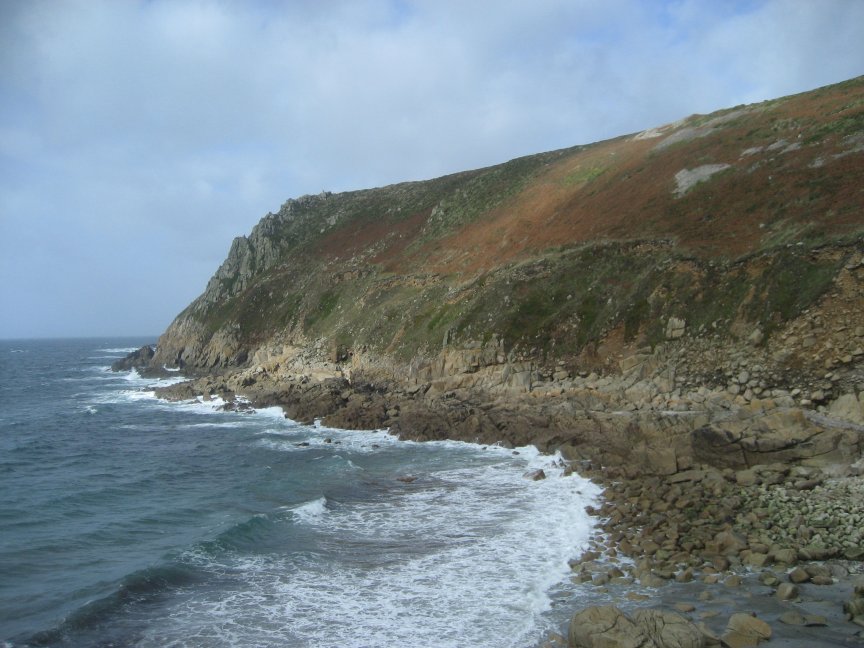
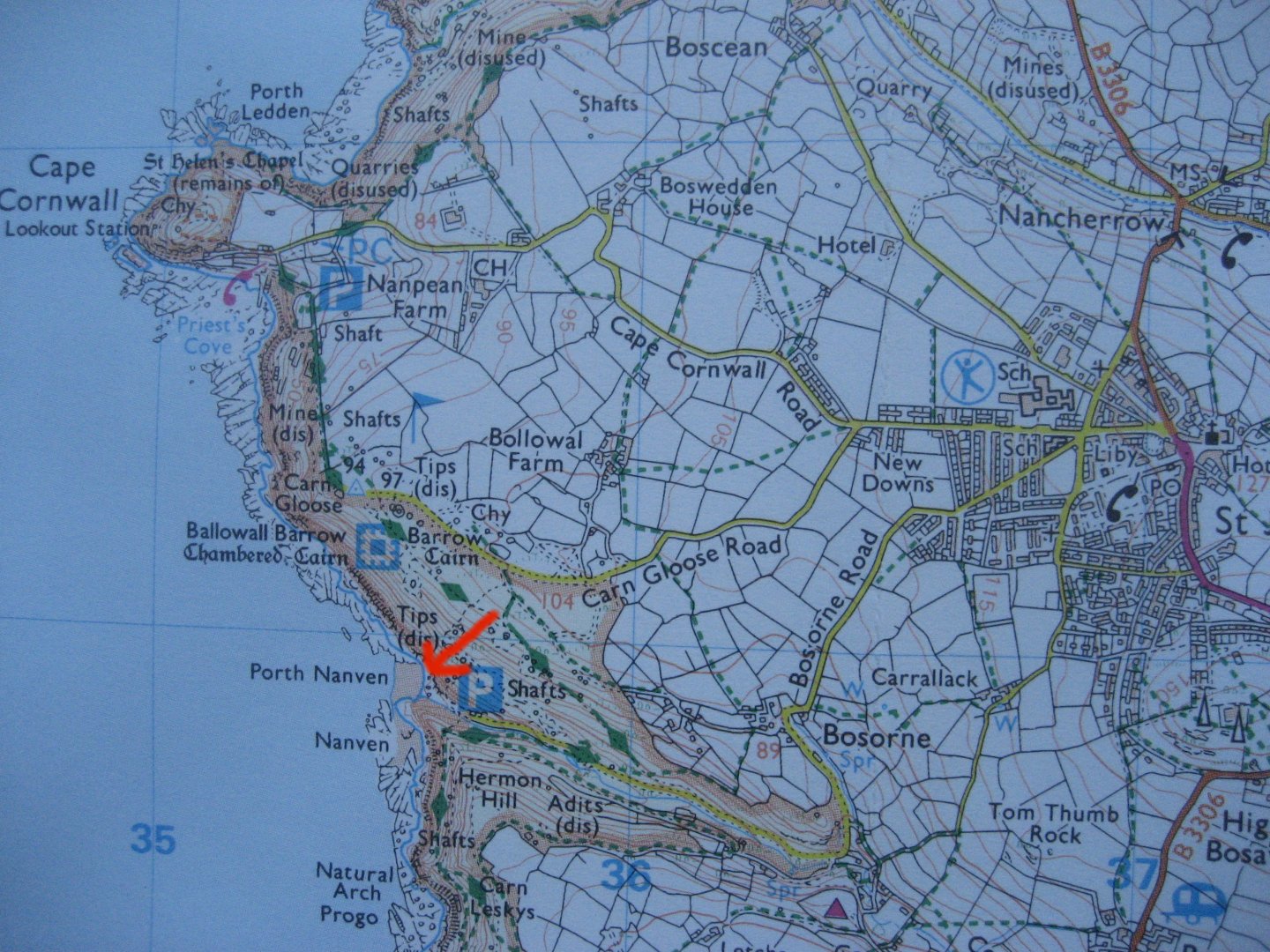
Penawell Cove is a wild and beautiful place, only a mile or so from the dramatic Cape Cornwall, right in the middle of an old Cornish mining area. To find the Cove head straight to Porth Nanven, where there is a National Trust car park. (voluntary donations) the cove is the beach. All around are adits for mine shafts tunnelled right into the cliffs. Whilst the views are spectacular, the whole cove is something of a history lesson as its eroded banks show the tale of the global warming that happened after the last ice age.
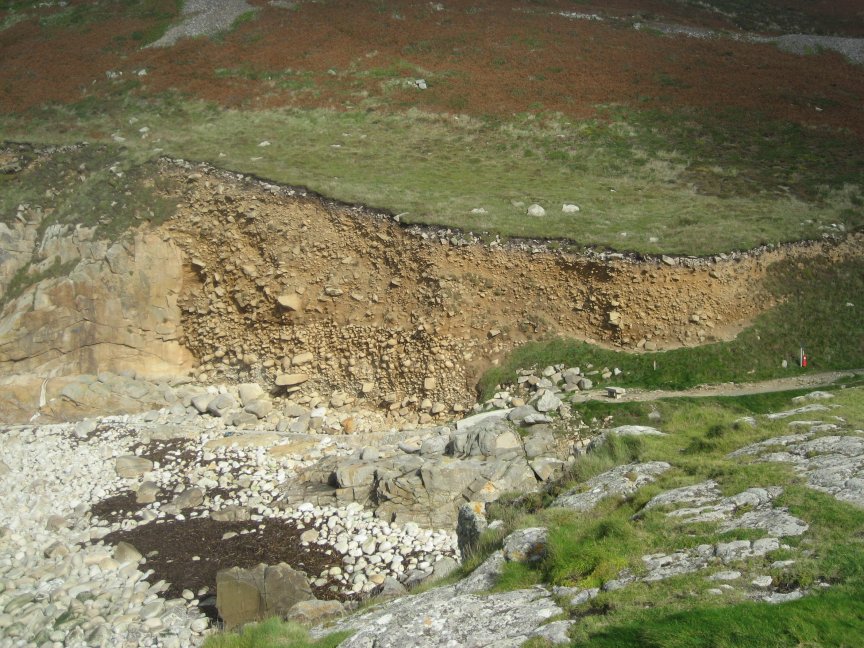
Modern erosion has cut through the cliffs to form their present shape, but they also show you the granite cliffs, and the raised boulder beach of the warm climate 120,000 years ago. This is all overlaid by thick deposits of angular frost shattered rock, the remains of the permafrost flows of the ice age. The Trust has put up some helpful boards with all the info you need to know.
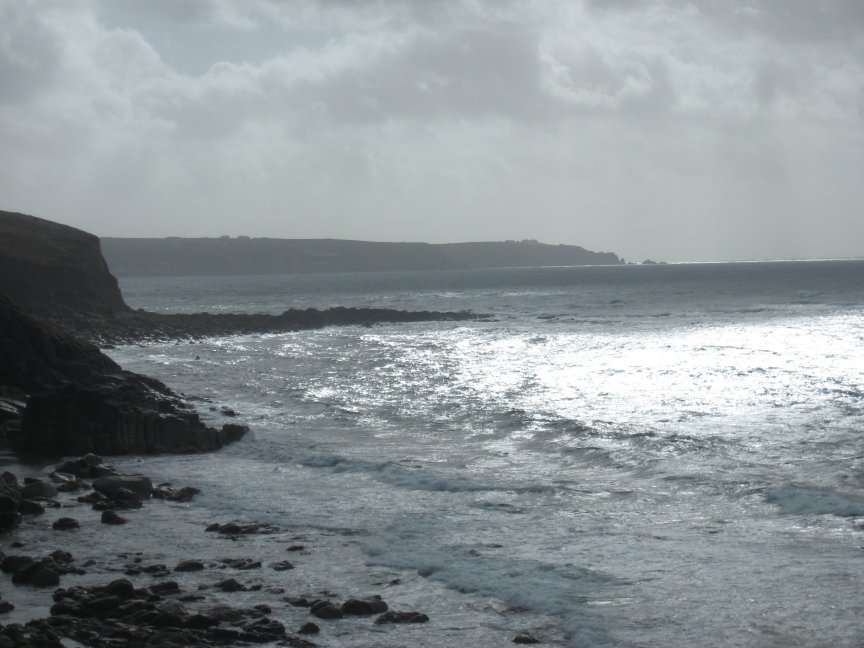
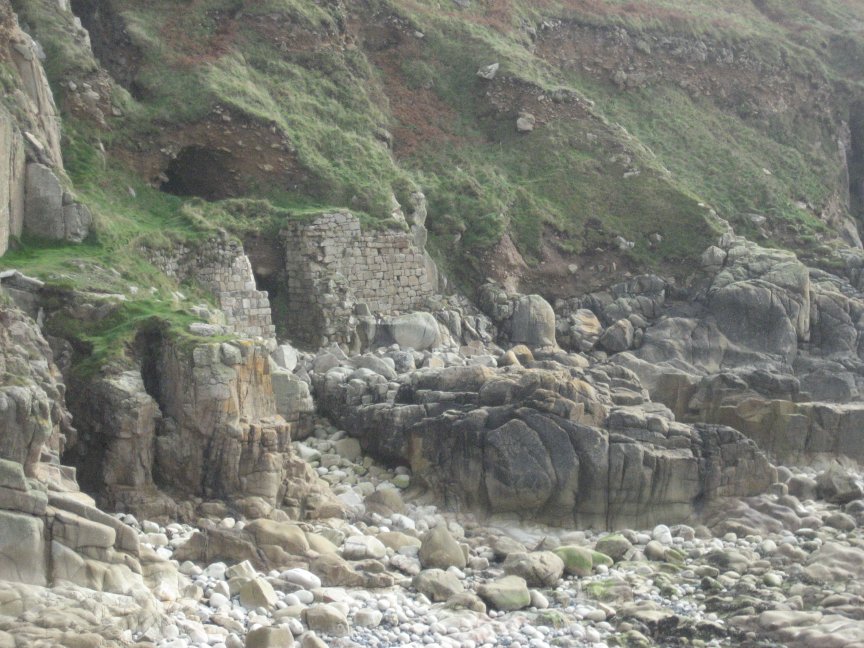
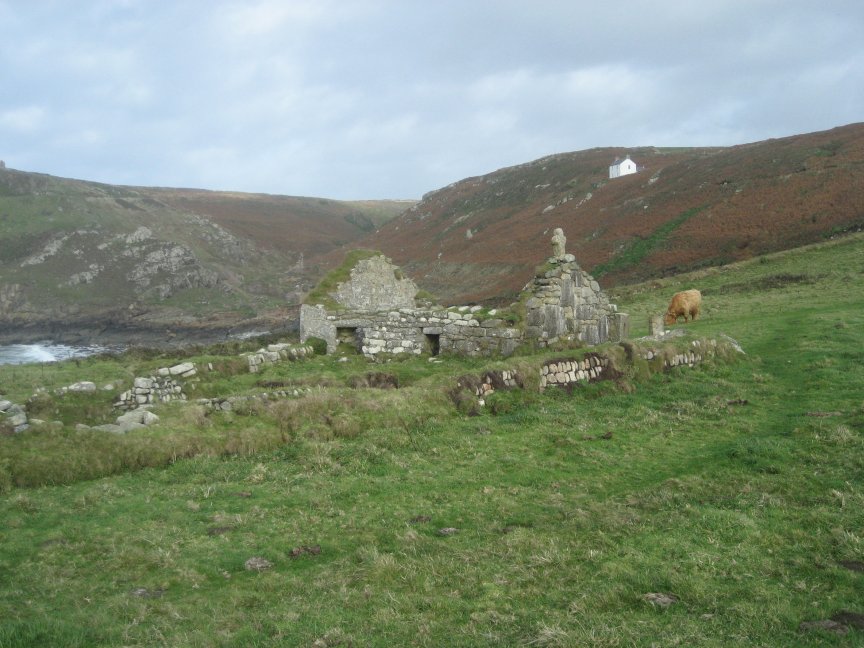
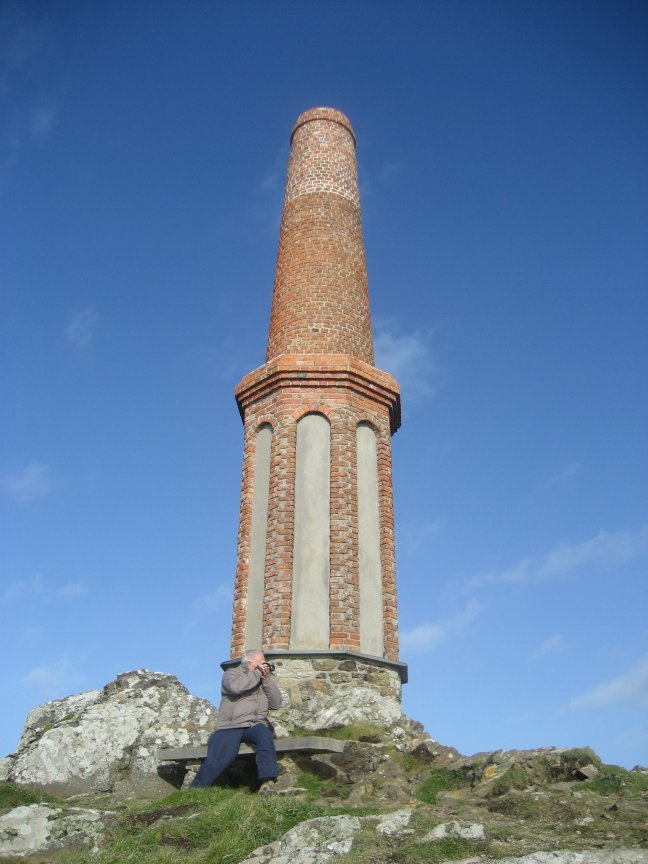
If you are feeling fit you can walk the mile or so over the cliffs to Cape Cornwall, or, (like me) drive the car down narrow winding lanes into a Cornwall that doesn’t seem to have changed much since the 1950’s. The scenery is stunning. In the distance you can see the ruined towers of the mine shafts, and in the foreground there is an ancient church surrounded by hugely horned cattle, and all around, the crash of waves on the rocks, and the cry of the seabirds. It’s marvellous.
Because I had got the tide wrong, I had a couple of hours to kill, so I drove back the nearest town, St. Just. It’s typically Cornish. Granite buildings grouped around a central square, a pasty shop, a couple of pubs, and now because of the tourists, a couple of gallery’s, an organic cafe and deli. It doesn’t sound much, but it’s charming and friendly, and for the Naval Enthusiast it harbours a big surprise.
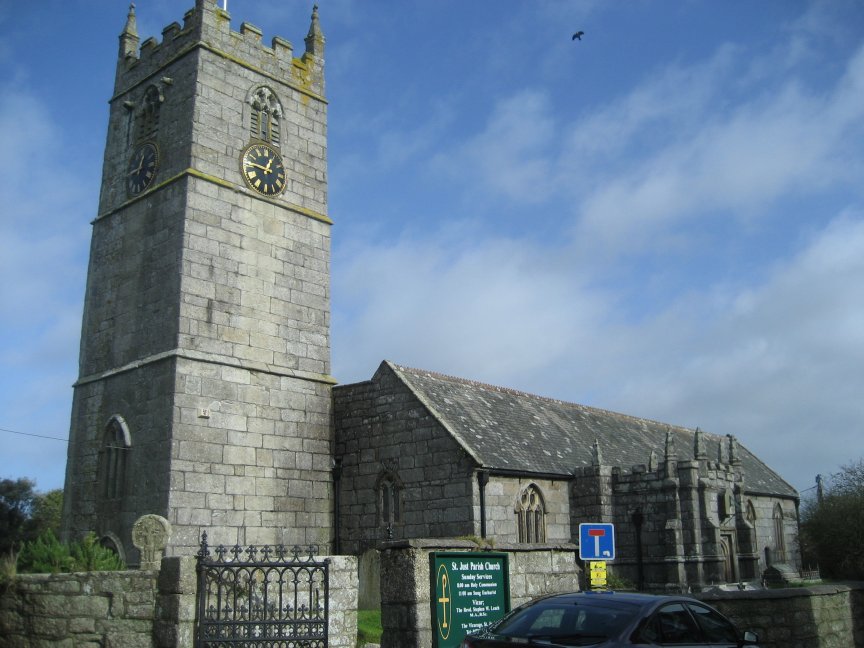
The church of St. Just in Penwith lies just of the main square. There has been a church on this site since around 428 AD, and over the years bits have been rebuilt and changed especially in the 14th century. I always like looking around church yards because you so often find quite a lot of information about shipwrecks. I was unlucky outside, but inside was a revelation. Draped across the north corner of the church, near the bell tower, is the Battle Ensign of H.M.S.Revenge.
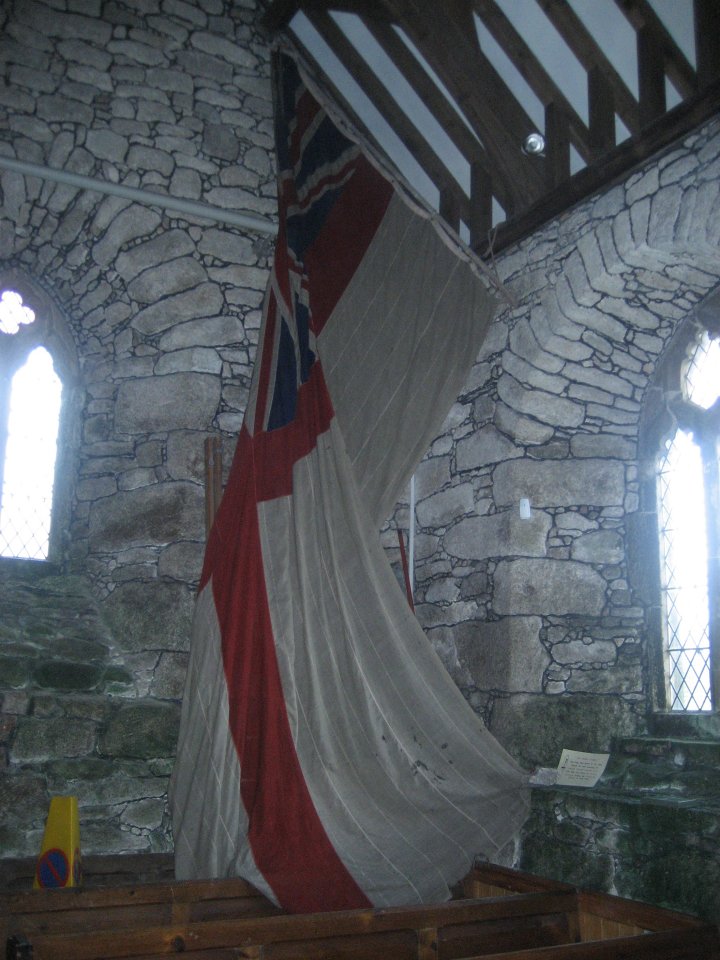
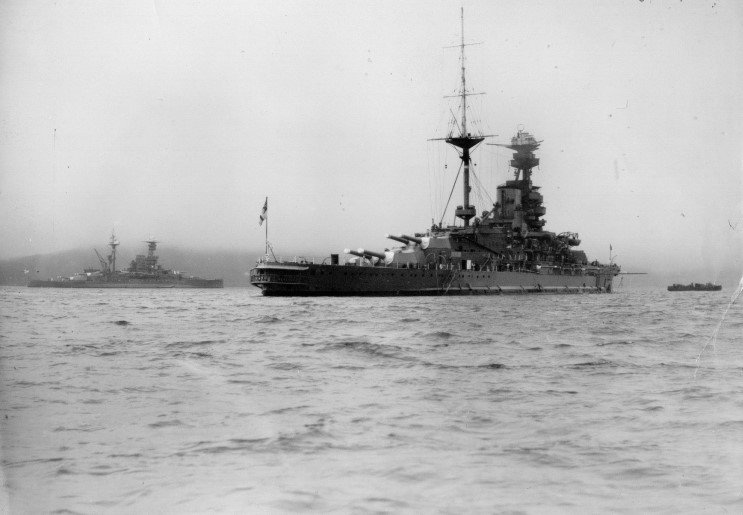
This flag was presented to the church by Captain Russell Grenfell. His family originated from the area, and as a junior officer he served on the battleship when it was part of the First Squadron of the Grand Fleet, and saw action at the Battle of Jutland. It was to the Revenge, that Vice- Admiral Burney transferred his Flag when his ship H.M.S. Malborough was torpedoed. The Revenge had been launched in May 1915 and served through-out both Wars and was finally scrapped at Inverkeithing in Sept 1948.
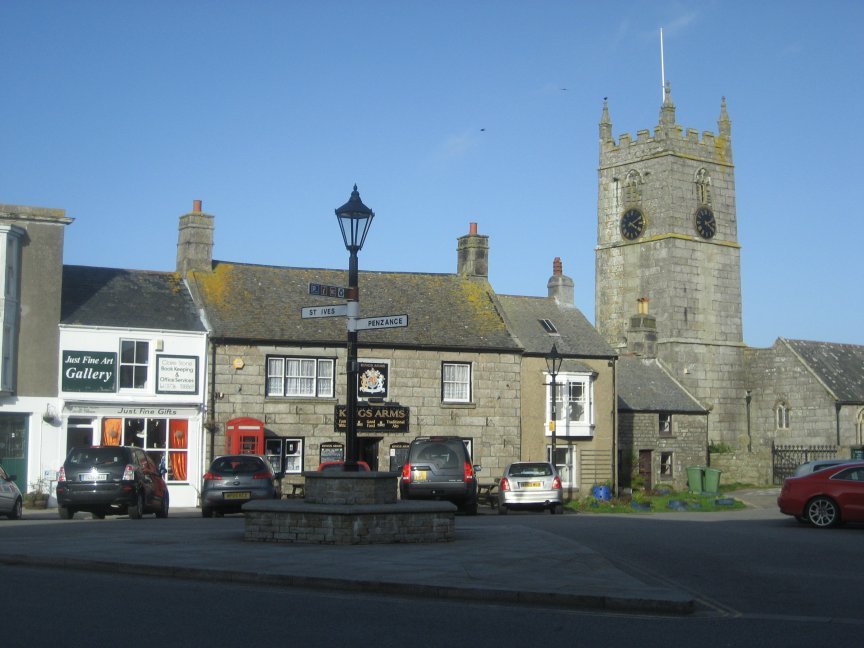
To find St.Just, make your way down the A30 to Penzance, then take the A3071 all the way to St.Just. Once there,take the Bosorn Road down to Porth Naven.

Andrew Burt says
Finally more details about the wreck – I remember the metal sticking out of the sand as a child.
Please note coreect spelling of ‘Penanwell’.
Cheers Andrew
andrew burt says
Just noticed the typos again
Porth navern should be porth nanven
And Penawell is Penanwell. Cheers. Andrew Burt
David Crewe says
Hi, While away in the west on hols last week, I went to visit St. Just, because my Mum often spoke of the time she spent there while on an extended holiday as a 5 year old when her father:- Joseph Perry lead the team as foreman from Cashmores Newport Mon sent down to complete the job of breaking the sub’ on the rocks. I wish that I had found this site before ! Next time I’ll look for the remains on the beach. Dave
Aaron Geis says
I was staying at St. Just this last week and saw the sign warning of the wreckage so I wnet looking for it at low tide. Very nearly gave up but then I saw this small bit of metal jutting from the sand between some rocks. The location seems to match with historic photos of where the sub was beached. Here’s some links to photos on Flickr https://www.flickr.com/photos/26746031@N07/13965749141/
https://www.flickr.com/photos/26746031@N07/13945826716/
wayne mccaffery says
Thanks so much for the posting. In 1973 I was hiking around Great Britain and stayed at the Youth Hostel nearby. The warden sent me down to the cove with instructions to look for the metal. And that the Torrey Canyon had ‘hung up’ out there somewhere. I am headed back with my wife and was trying to find the location. Thanks.
wayne iNWI